Advanced Chemistry homeschool curriculum.
Your student studies atomic structure, bonding, reactions, and equilibrium with calculations and lab work.
A personalized lesson from the course
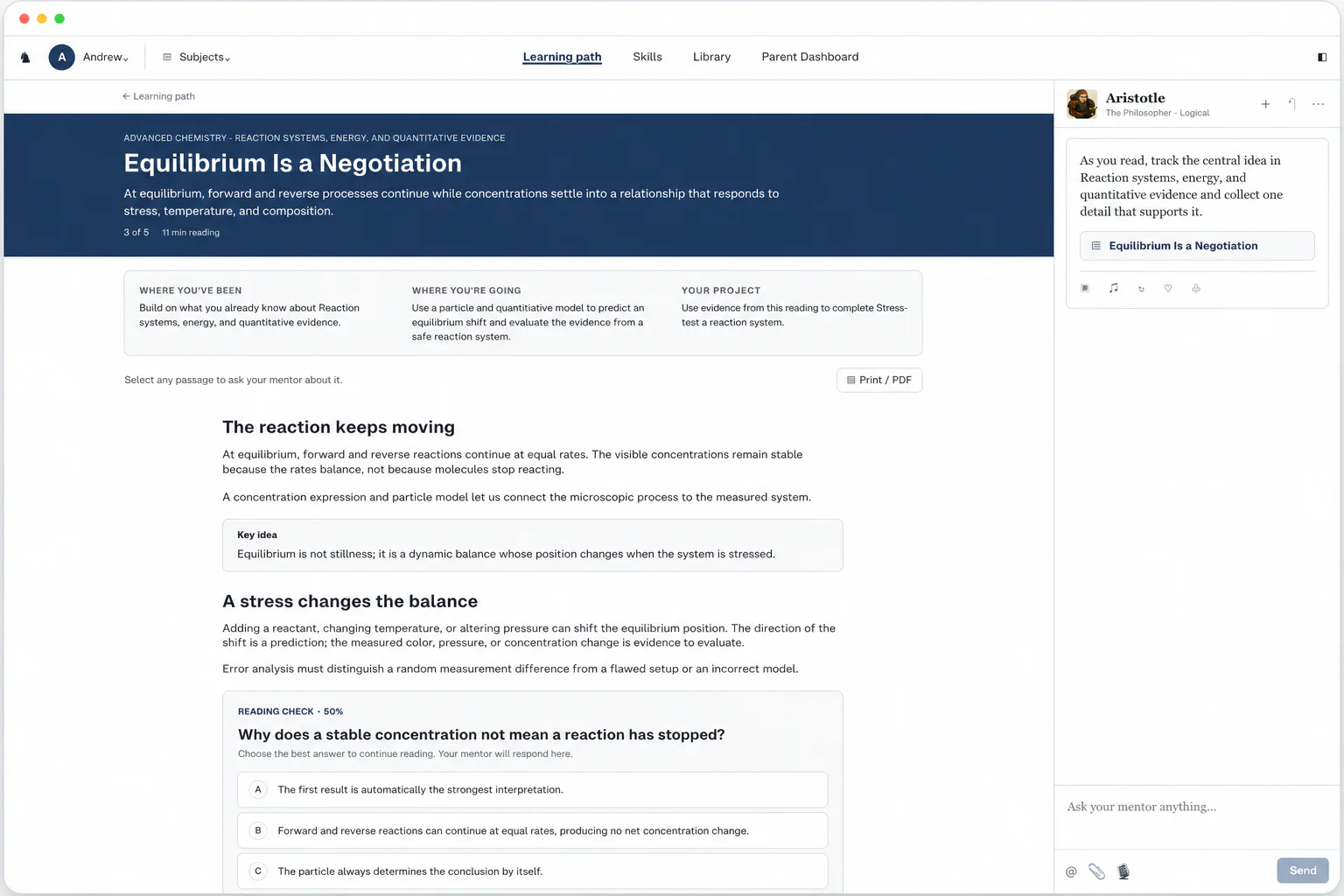
At equilibrium, forward and reverse processes continue while concentrations settle into a relationship that responds to stress, temperature, and composition.
- Lesson
- Equilibrium Is a Negotiation
- Goal
- Use a particle and quantitative model to predict an equilibrium shift and evaluate the evidence from a safe reaction system.
How a lesson works
An 11-minute reading
This example lesson comes from the unit on reaction systems, energy, and quantitative evidence. It moves from “The reaction keeps moving” to “A stress changes the balance” and builds to one idea: equilibrium is not stillness; it is a dynamic balance whose position changes when the system is stressed.
Help inside the reading
Your child can highlight any line of “Equilibrium Is a Negotiation” and ask our Always-On Mentor about it or ask for a visual, and it offers help on its own whenever they seem stuck.
A check halfway through
Your child answers “Why does a stable concentration not mean a reaction has stopped?” before reading on, and the Reading Check at the end asks new questions.
A project your child hands in
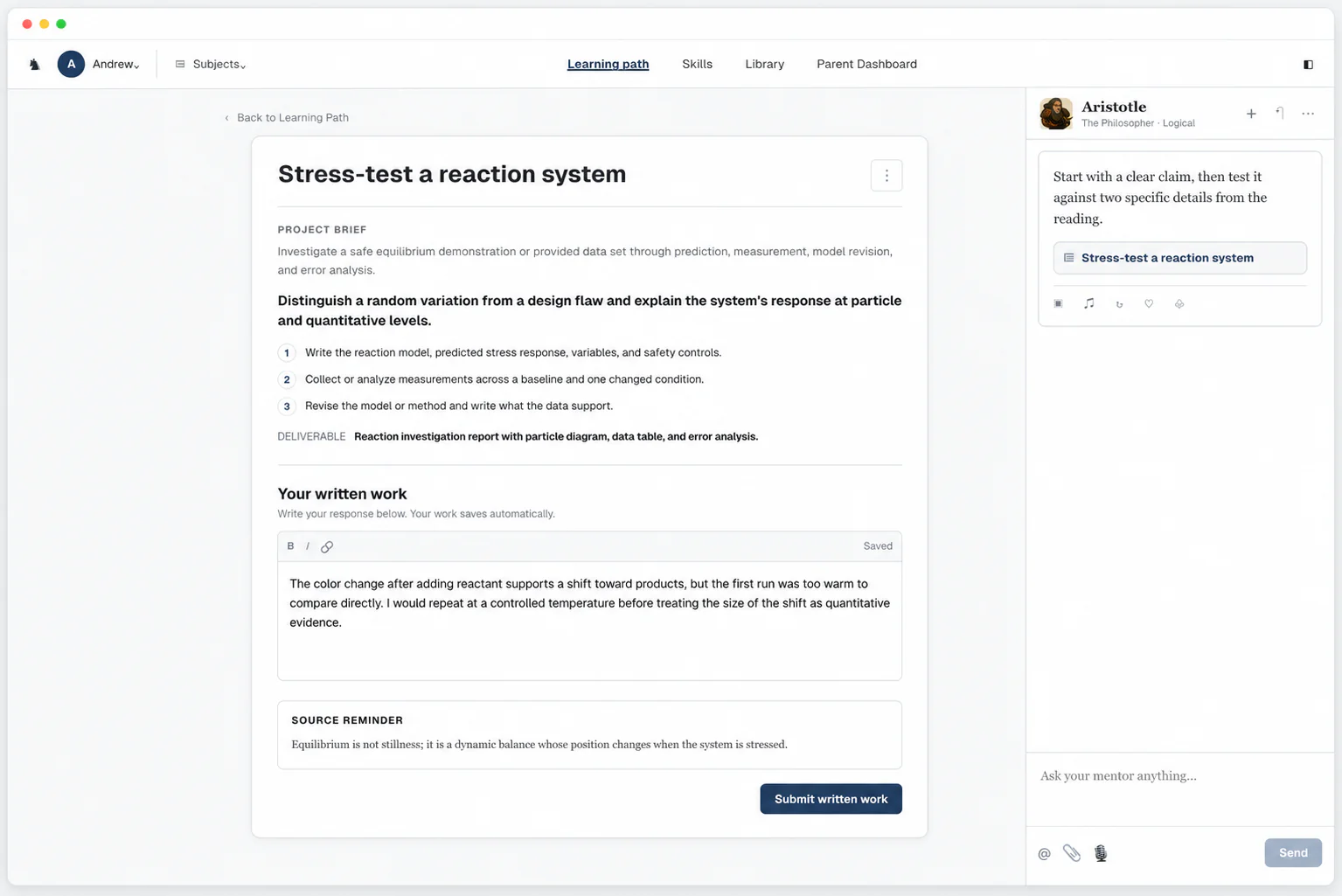
Investigate a safe equilibrium demonstration or provided data set through prediction, measurement, model revision, and error analysis.
- Task
- Distinguish a random variation from a design flaw and explain the system's response at particle and quantitative levels
- Hand in
- Reaction investigation report with particle diagram, data table, and error analysis
From investigation to evidence
Students run labs with safe procedures, analyze the data, and document each investigation in a report graded as soon as it is submitted. Advanced Chemistry runs through 24 units and 144 skills, starting with atomic structure and properties, molecular and ionic structure, and intermolecular forces and properties.
- Supervised lab reports with error analysis
- Particle, symbolic, graphical, and mathematical models
- Corrected quantitative and argument-based responses
Units and skills
Advanced Chemistry24 units · 144 skills
Atomic structure and properties6 skills
- Create or analyze chemical models and representations of Atomic structure and properties
- Evaluate a scientific question and method involving Atomic structure and properties
- Represent chemical data and phenomena involving Atomic structure and properties
- Analyze and evaluate a model involving Atomic structure and properties
- Apply mathematical routines to Atomic structure and properties
- Develop an evidence-based chemical argument about Atomic structure and properties
Molecular and ionic structure6 skills
- Create or analyze chemical models and representations of Molecular and ionic structure
- Evaluate a scientific question and method involving Molecular and ionic structure
- Represent chemical data and phenomena involving Molecular and ionic structure
- Analyze and evaluate a model involving Molecular and ionic structure
- Apply mathematical routines to Molecular and ionic structure
- Develop an evidence-based chemical argument about Molecular and ionic structure
Intermolecular forces and properties6 skills
- Create or analyze chemical models and representations of Intermolecular forces and properties
- Evaluate a scientific question and method involving Intermolecular forces and properties
- Represent chemical data and phenomena involving Intermolecular forces and properties
- Analyze and evaluate a model involving Intermolecular forces and properties
- Apply mathematical routines to Intermolecular forces and properties
- Develop an evidence-based chemical argument about Intermolecular forces and properties
Chemical reactions6 skills
- Create or analyze chemical models and representations of Chemical reactions
- Evaluate a scientific question and method involving Chemical reactions
- Represent chemical data and phenomena involving Chemical reactions
- Analyze and evaluate a model involving Chemical reactions
- Apply mathematical routines to Chemical reactions
- Develop an evidence-based chemical argument about Chemical reactions
Kinetics6 skills
- Create or analyze chemical models and representations of Kinetics
- Evaluate a scientific question and method involving Kinetics
- Represent chemical data and phenomena involving Kinetics
- Analyze and evaluate a model involving Kinetics
- Apply mathematical routines to Kinetics
- Develop an evidence-based chemical argument about Kinetics
Thermodynamics6 skills
- Create or analyze chemical models and representations of Thermodynamics
- Evaluate a scientific question and method involving Thermodynamics
- Represent chemical data and phenomena involving Thermodynamics
- Analyze and evaluate a model involving Thermodynamics
- Apply mathematical routines to Thermodynamics
- Develop an evidence-based chemical argument about Thermodynamics
Equilibrium6 skills
- Create or analyze chemical models and representations of Equilibrium
- Evaluate a scientific question and method involving Equilibrium
- Represent chemical data and phenomena involving Equilibrium
- Analyze and evaluate a model involving Equilibrium
- Apply mathematical routines to Equilibrium
- Develop an evidence-based chemical argument about Equilibrium
Acids and bases6 skills
- Create or analyze chemical models and representations of Acids and bases
- Evaluate a scientific question and method involving Acids and bases
- Represent chemical data and phenomena involving Acids and bases
- Analyze and evaluate a model involving Acids and bases
- Apply mathematical routines to Acids and bases
- Develop an evidence-based chemical argument about Acids and bases
Applications of thermodynamics6 skills
- Create or analyze chemical models and representations of Applications of thermodynamics
- Evaluate a scientific question and method involving Applications of thermodynamics
- Represent chemical data and phenomena involving Applications of thermodynamics
- Analyze and evaluate a model involving Applications of thermodynamics
- Apply mathematical routines to Applications of thermodynamics
- Develop an evidence-based chemical argument about Applications of thermodynamics
Experimental design6 skills
- Create or analyze chemical models and representations of Experimental design
- Evaluate a scientific question and method involving Experimental design
- Represent chemical data and phenomena involving Experimental design
- Analyze and evaluate a model involving Experimental design
- Apply mathematical routines to Experimental design
- Develop an evidence-based chemical argument about Experimental design
Data and error analysis6 skills
- Create or analyze chemical models and representations of Data and error analysis
- Evaluate a scientific question and method involving Data and error analysis
- Represent chemical data and phenomena involving Data and error analysis
- Analyze and evaluate a model involving Data and error analysis
- Apply mathematical routines to Data and error analysis
- Develop an evidence-based chemical argument about Data and error analysis
Cumulative chemical investigation6 skills
- Create or analyze chemical models and representations of Cumulative chemical investigation
- Evaluate a scientific question and method involving Cumulative chemical investigation
- Represent chemical data and phenomena involving Cumulative chemical investigation
- Analyze and evaluate a model involving Cumulative chemical investigation
- Apply mathematical routines to Cumulative chemical investigation
- Develop an evidence-based chemical argument about Cumulative chemical investigation
Safe experimental practice6 skills
- Create or analyze chemical models and representations of Safe experimental practice
- Evaluate a scientific question and method involving Safe experimental practice
- Represent chemical data and phenomena involving Safe experimental practice
- Analyze and evaluate a model involving Safe experimental practice
- Apply mathematical routines to Safe experimental practice
- Develop an evidence-based chemical argument about Safe experimental practice
Inquiry design and variable control6 skills
- Create or analyze chemical models and representations of Inquiry design and variable control
- Evaluate a scientific question and method involving Inquiry design and variable control
- Represent chemical data and phenomena involving Inquiry design and variable control
- Analyze and evaluate a model involving Inquiry design and variable control
- Apply mathematical routines to Inquiry design and variable control
- Develop an evidence-based chemical argument about Inquiry design and variable control
Raw data, uncertainty, and error6 skills
- Create or analyze chemical models and representations of Raw data, uncertainty, and error
- Evaluate a scientific question and method involving Raw data, uncertainty, and error
- Represent chemical data and phenomena involving Raw data, uncertainty, and error
- Analyze and evaluate a model involving Raw data, uncertainty, and error
- Apply mathematical routines to Raw data, uncertainty, and error
- Develop an evidence-based chemical argument about Raw data, uncertainty, and error
Laboratory notebook and scientific communication6 skills
- Create or analyze chemical models and representations of Laboratory notebook and scientific communication
- Evaluate a scientific question and method involving Laboratory notebook and scientific communication
- Represent chemical data and phenomena involving Laboratory notebook and scientific communication
- Analyze and evaluate a model involving Laboratory notebook and scientific communication
- Apply mathematical routines to Laboratory notebook and scientific communication
- Develop an evidence-based chemical argument about Laboratory notebook and scientific communication
Multiple quantitative representations6 skills
- Create or analyze chemical models and representations of Multiple quantitative representations
- Evaluate a scientific question and method involving Multiple quantitative representations
- Represent chemical data and phenomena involving Multiple quantitative representations
- Analyze and evaluate a model involving Multiple quantitative representations
- Apply mathematical routines to Multiple quantitative representations
- Develop an evidence-based chemical argument about Multiple quantitative representations
Graph construction and interpretation6 skills
- Create or analyze chemical models and representations of Graph construction and interpretation
- Evaluate a scientific question and method involving Graph construction and interpretation
- Represent chemical data and phenomena involving Graph construction and interpretation
- Analyze and evaluate a model involving Graph construction and interpretation
- Apply mathematical routines to Graph construction and interpretation
- Develop an evidence-based chemical argument about Graph construction and interpretation
Written mathematical justification6 skills
- Create or analyze chemical models and representations of Written mathematical justification
- Evaluate a scientific question and method involving Written mathematical justification
- Represent chemical data and phenomena involving Written mathematical justification
- Analyze and evaluate a model involving Written mathematical justification
- Apply mathematical routines to Written mathematical justification
- Develop an evidence-based chemical argument about Written mathematical justification
Research ethics and design6 skills
- Create or analyze chemical models and representations of Research ethics and design
- Evaluate a scientific question and method involving Research ethics and design
- Represent chemical data and phenomena involving Research ethics and design
- Analyze and evaluate a model involving Research ethics and design
- Apply mathematical routines to Research ethics and design
- Develop an evidence-based chemical argument about Research ethics and design
Evidence quality and limitations6 skills
- Create or analyze chemical models and representations of Evidence quality and limitations
- Evaluate a scientific question and method involving Evidence quality and limitations
- Represent chemical data and phenomena involving Evidence quality and limitations
- Analyze and evaluate a model involving Evidence quality and limitations
- Apply mathematical routines to Evidence quality and limitations
- Develop an evidence-based chemical argument about Evidence quality and limitations
Advanced Chemistry cumulative assessment6 skills
- Create or analyze chemical models and representations of Advanced Chemistry cumulative assessment
- Evaluate a scientific question and method involving Advanced Chemistry cumulative assessment
- Represent chemical data and phenomena involving Advanced Chemistry cumulative assessment
- Analyze and evaluate a model involving Advanced Chemistry cumulative assessment
- Apply mathematical routines to Advanced Chemistry cumulative assessment
- Develop an evidence-based chemical argument about Advanced Chemistry cumulative assessment
Advanced Chemistry exam-mode practice6 skills
- Create or analyze chemical models and representations of Advanced Chemistry exam-mode practice
- Evaluate a scientific question and method involving Advanced Chemistry exam-mode practice
- Represent chemical data and phenomena involving Advanced Chemistry exam-mode practice
- Analyze and evaluate a model involving Advanced Chemistry exam-mode practice
- Apply mathematical routines to Advanced Chemistry exam-mode practice
- Develop an evidence-based chemical argument about Advanced Chemistry exam-mode practice
Advanced Chemistry reflection and transfer6 skills
- Create or analyze chemical models and representations of Advanced Chemistry reflection and transfer
- Evaluate a scientific question and method involving Advanced Chemistry reflection and transfer
- Represent chemical data and phenomena involving Advanced Chemistry reflection and transfer
- Analyze and evaluate a model involving Advanced Chemistry reflection and transfer
- Apply mathematical routines to Advanced Chemistry reflection and transfer
- Develop an evidence-based chemical argument about Advanced Chemistry reflection and transfer
Questions parents ask
How does Advanced Chemistry prepare my student for AP Chemistry?
- Advanced Chemistry follows the AP Chemistry framework unit by unit, as its skill tree shows. Your teen explains and applies the ideas in written responses and projects, so the work shows which skills are secure and which need more practice.
How does a homeschooler register for an AP exam?
- An AP coordinator at an AP-authorized local school arranges registration. Use College Board’s homeschool exam guidance to find a host school. That school sets its deadlines and outside-student policies; its coordinator orders the exam, collects fees, and tells your child where and when to test.
Which course title goes on a homeschool transcript?
- Advanced Chemistry, not AP Chemistry. The AP designation requires College Board Course Audit authorization of the course, which framework alignment does not give. We generate the transcript with that title, ready for you to sign as homeschool administrator.
How can AP scores earn college credit?
- Colleges award credit under their own AP score policies. College Board reports scores on a 1–5 scale, separately from our coursework grades; check the college’s required score and whether it grants credit, placement, or both.
Who arranges the labs and equipment?
- We provide the lab sequence, instructions, and analysis questions, grade each investigation report as soon as it is submitted, and keep it with the course record. Your family supplies the equipment, a safe workspace, and an adult present for hands-on work.
Advanced Chemistry, with the teaching and records handled
$49/month after the trial.