Advanced European History homeschool curriculum.
Your student studies European history chronologically and practices writing from primary sources.
A personalized lesson from the course
Ideas such as sovereignty, rights, labor, nation, and empire change when they move through institutions, conflicts, and unequal relationships.
- Lesson
- Ideas Travel With Power
- Goal
- Trace one idea across three turning points and compare how different actors used or contested it.
How a lesson works
An 11-minute reading
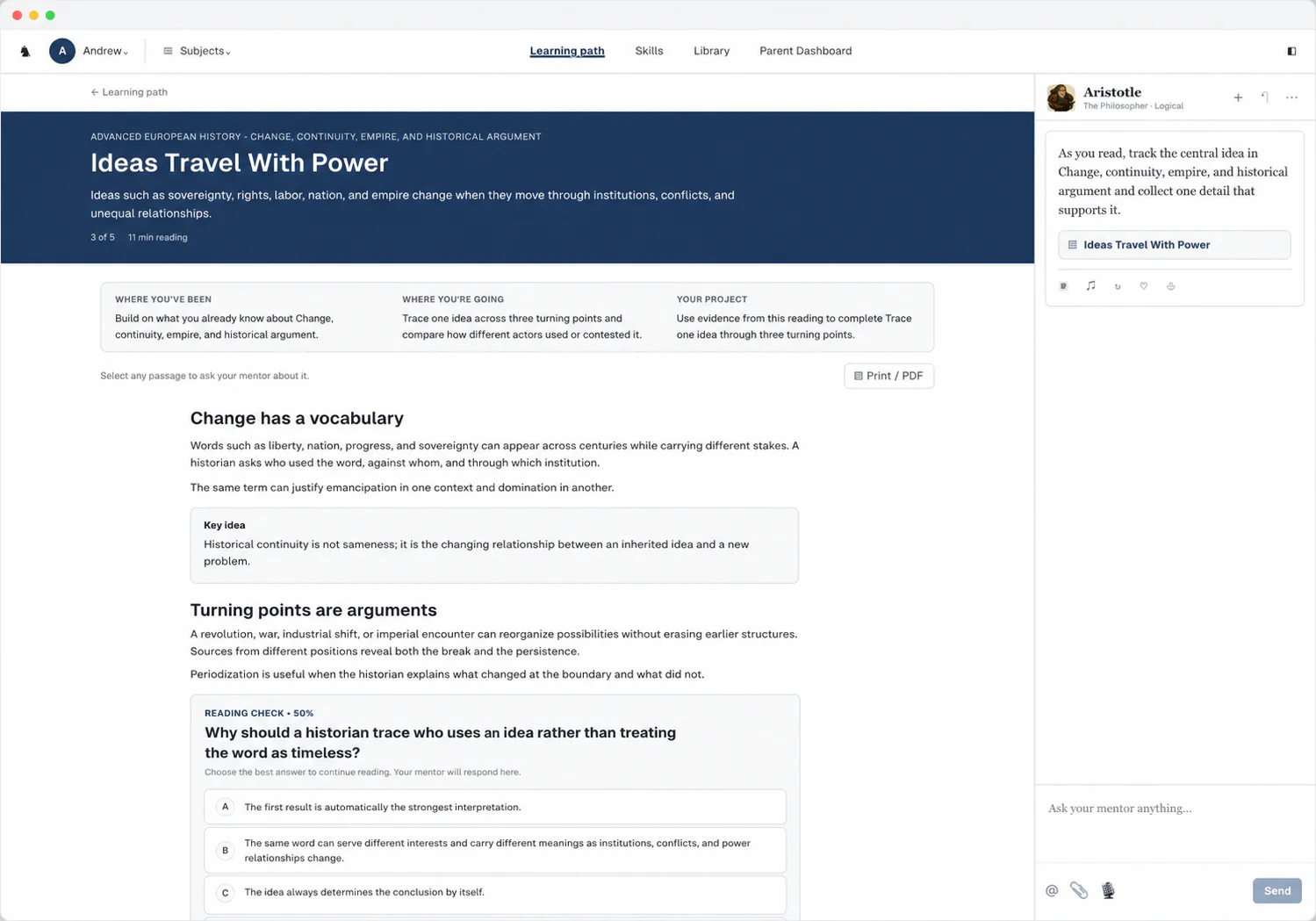
This example lesson comes from the unit on change, continuity, empire, and historical argument. It moves from “Change has a vocabulary” to “Turning points are arguments” and builds to one idea: historical continuity is not sameness; it is the changing relationship between an inherited idea and a new problem.
Help inside the reading
Our Always-On Mentor stays beside “Ideas Travel With Power” the whole way through, answering questions about any highlighted line and, during the Reading Check, clarifying a question without giving the answer away.
A check halfway through
Your child answers “Why should a historian trace who uses an idea rather than treating the word as timeless?” before reading on, and the Reading Check at the end asks new questions.
A project your child hands in
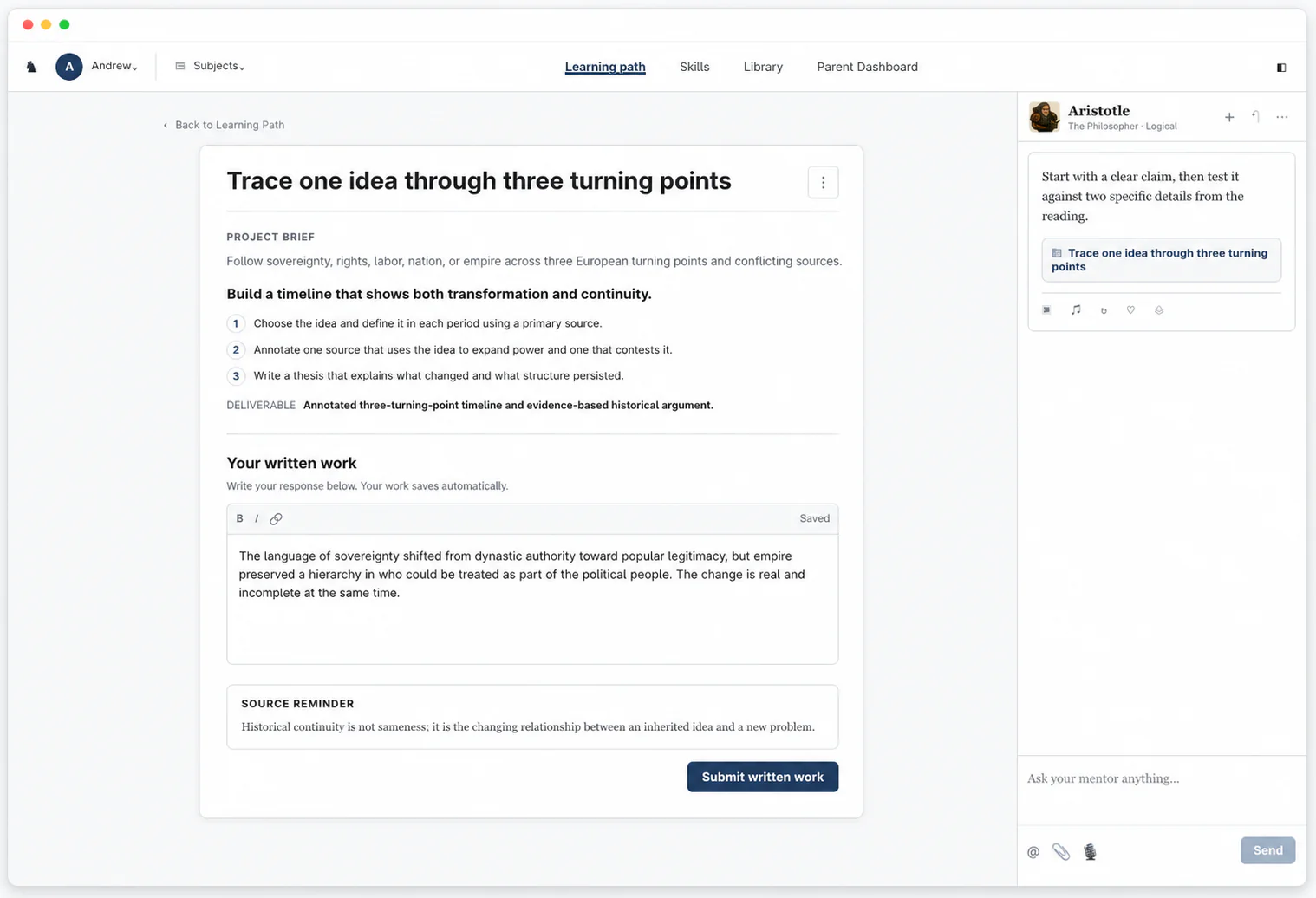
Follow sovereignty, rights, labor, nation, or empire across three European turning points and conflicting sources.
- Task
- Build a timeline that shows both transformation and continuity
- Hand in
- Annotated three-turning-point timeline and evidence-based historical argument
Arguments backed by evidence
The course follows a chronology and returns to recurring themes. Students work with sources and practice the writing used to explain historical change. Advanced European History runs through 20 units and 120 skills, starting with renaissance and exploration, age of Reformation, and absolutism and constitutionalism.
- Timelines and maps connecting events with recurring themes
- Primary-source analyses and document-based essays
- Long-form historical arguments with revision
Units and skills
Advanced European History20 units · 120 skills
Renaissance and exploration6 skills
- Explain historical developments and processes in Renaissance and exploration
- Source and situate historical evidence related to Renaissance and exploration
- Analyze claims and evidence in sources about Renaissance and exploration
- Contextualize Renaissance and exploration within broader historical developments
- Make historical connections involving Renaissance and exploration
- Construct and support a historical argument about Renaissance and exploration
Age of Reformation6 skills
- Explain historical developments and processes in Age of Reformation
- Source and situate historical evidence related to Age of Reformation
- Analyze claims and evidence in sources about Age of Reformation
- Contextualize Age of Reformation within broader historical developments
- Make historical connections involving Age of Reformation
- Construct and support a historical argument about Age of Reformation
Absolutism and constitutionalism6 skills
- Explain historical developments and processes in Absolutism and constitutionalism
- Source and situate historical evidence related to Absolutism and constitutionalism
- Analyze claims and evidence in sources about Absolutism and constitutionalism
- Contextualize Absolutism and constitutionalism within broader historical developments
- Make historical connections involving Absolutism and constitutionalism
- Construct and support a historical argument about Absolutism and constitutionalism
Scientific and philosophical developments6 skills
- Explain historical developments and processes in Scientific and philosophical developments
- Source and situate historical evidence related to Scientific and philosophical developments
- Analyze claims and evidence in sources about Scientific and philosophical developments
- Contextualize Scientific and philosophical developments within broader historical developments
- Make historical connections involving Scientific and philosophical developments
- Construct and support a historical argument about Scientific and philosophical developments
Conflict, crisis, and reaction6 skills
- Explain historical developments and processes in Conflict, crisis, and reaction
- Source and situate historical evidence related to Conflict, crisis, and reaction
- Analyze claims and evidence in sources about Conflict, crisis, and reaction
- Contextualize Conflict, crisis, and reaction within broader historical developments
- Make historical connections involving Conflict, crisis, and reaction
- Construct and support a historical argument about Conflict, crisis, and reaction
Industrialization and its effects6 skills
- Explain historical developments and processes in Industrialization and its effects
- Source and situate historical evidence related to Industrialization and its effects
- Analyze claims and evidence in sources about Industrialization and its effects
- Contextualize Industrialization and its effects within broader historical developments
- Make historical connections involving Industrialization and its effects
- Construct and support a historical argument about Industrialization and its effects
Nineteenth-century perspectives6 skills
- Explain historical developments and processes in Nineteenth-century perspectives
- Source and situate historical evidence related to Nineteenth-century perspectives
- Analyze claims and evidence in sources about Nineteenth-century perspectives
- Contextualize Nineteenth-century perspectives within broader historical developments
- Make historical connections involving Nineteenth-century perspectives
- Construct and support a historical argument about Nineteenth-century perspectives
Twentieth-century global conflicts6 skills
- Explain historical developments and processes in Twentieth-century global conflicts
- Source and situate historical evidence related to Twentieth-century global conflicts
- Analyze claims and evidence in sources about Twentieth-century global conflicts
- Contextualize Twentieth-century global conflicts within broader historical developments
- Make historical connections involving Twentieth-century global conflicts
- Construct and support a historical argument about Twentieth-century global conflicts
Cold War and contemporary Europe6 skills
- Explain historical developments and processes in Cold War and contemporary Europe
- Source and situate historical evidence related to Cold War and contemporary Europe
- Analyze claims and evidence in sources about Cold War and contemporary Europe
- Contextualize Cold War and contemporary Europe within broader historical developments
- Make historical connections involving Cold War and contemporary Europe
- Construct and support a historical argument about Cold War and contemporary Europe
Primary-source analysis6 skills
- Explain historical developments and processes in Primary-source analysis
- Source and situate historical evidence related to Primary-source analysis
- Analyze claims and evidence in sources about Primary-source analysis
- Contextualize Primary-source analysis within broader historical developments
- Make historical connections involving Primary-source analysis
- Construct and support a historical argument about Primary-source analysis
Document-based argument6 skills
- Explain historical developments and processes in Document-based argument
- Source and situate historical evidence related to Document-based argument
- Analyze claims and evidence in sources about Document-based argument
- Contextualize Document-based argument within broader historical developments
- Make historical connections involving Document-based argument
- Construct and support a historical argument about Document-based argument
Long historical argument6 skills
- Explain historical developments and processes in Long historical argument
- Source and situate historical evidence related to Long historical argument
- Analyze claims and evidence in sources about Long historical argument
- Contextualize Long historical argument within broader historical developments
- Make historical connections involving Long historical argument
- Construct and support a historical argument about Long historical argument
Source credibility and provenance6 skills
- Explain historical developments and processes in Source credibility and provenance
- Source and situate historical evidence related to Source credibility and provenance
- Analyze claims and evidence in sources about Source credibility and provenance
- Contextualize Source credibility and provenance within broader historical developments
- Make historical connections involving Source credibility and provenance
- Construct and support a historical argument about Source credibility and provenance
Claim, evidence, and reasoning6 skills
- Explain historical developments and processes in Claim, evidence, and reasoning
- Source and situate historical evidence related to Claim, evidence, and reasoning
- Analyze claims and evidence in sources about Claim, evidence, and reasoning
- Contextualize Claim, evidence, and reasoning within broader historical developments
- Make historical connections involving Claim, evidence, and reasoning
- Construct and support a historical argument about Claim, evidence, and reasoning
Counterargument and qualification6 skills
- Explain historical developments and processes in Counterargument and qualification
- Source and situate historical evidence related to Counterargument and qualification
- Analyze claims and evidence in sources about Counterargument and qualification
- Contextualize Counterargument and qualification within broader historical developments
- Make historical connections involving Counterargument and qualification
- Construct and support a historical argument about Counterargument and qualification
Drafting, conferencing, and revision6 skills
- Explain historical developments and processes in Drafting, conferencing, and revision
- Source and situate historical evidence related to Drafting, conferencing, and revision
- Analyze claims and evidence in sources about Drafting, conferencing, and revision
- Contextualize Drafting, conferencing, and revision within broader historical developments
- Make historical connections involving Drafting, conferencing, and revision
- Construct and support a historical argument about Drafting, conferencing, and revision
Timed evidence-based writing6 skills
- Explain historical developments and processes in Timed evidence-based writing
- Source and situate historical evidence related to Timed evidence-based writing
- Analyze claims and evidence in sources about Timed evidence-based writing
- Contextualize Timed evidence-based writing within broader historical developments
- Make historical connections involving Timed evidence-based writing
- Construct and support a historical argument about Timed evidence-based writing
Advanced European History cumulative assessment6 skills
- Explain historical developments and processes in Advanced European History cumulative assessment
- Source and situate historical evidence related to Advanced European History cumulative assessment
- Analyze claims and evidence in sources about Advanced European History cumulative assessment
- Contextualize Advanced European History cumulative assessment within broader historical developments
- Make historical connections involving Advanced European History cumulative assessment
- Construct and support a historical argument about Advanced European History cumulative assessment
Advanced European History exam-mode practice6 skills
- Explain historical developments and processes in Advanced European History exam-mode practice
- Source and situate historical evidence related to Advanced European History exam-mode practice
- Analyze claims and evidence in sources about Advanced European History exam-mode practice
- Contextualize Advanced European History exam-mode practice within broader historical developments
- Make historical connections involving Advanced European History exam-mode practice
- Construct and support a historical argument about Advanced European History exam-mode practice
Advanced European History reflection and transfer6 skills
- Explain historical developments and processes in Advanced European History reflection and transfer
- Source and situate historical evidence related to Advanced European History reflection and transfer
- Analyze claims and evidence in sources about Advanced European History reflection and transfer
- Contextualize Advanced European History reflection and transfer within broader historical developments
- Make historical connections involving Advanced European History reflection and transfer
- Construct and support a historical argument about Advanced European History reflection and transfer
Questions parents ask
How does Advanced European History prepare my student for AP European History?
- Advanced European History follows the AP European History framework unit by unit, as its skill tree shows. Your teen explains and applies the ideas in written responses and projects, so the work shows which skills are secure and which need more practice.
How does a homeschooler register for an AP exam?
- An AP coordinator at an AP-authorized local school arranges registration. Use College Board’s homeschool exam guidance to find a host school. That school sets its deadlines and outside-student policies; its coordinator orders the exam, collects fees, and tells your child where and when to test.
Which course title goes on a homeschool transcript?
- Advanced European History, not AP European History. The AP designation requires College Board Course Audit authorization of the course, which framework alignment does not give. We generate the transcript with that title, ready for you to sign as homeschool administrator.
How can AP scores earn college credit?
- Colleges award credit under their own AP score policies. College Board reports scores on a 1–5 scale, separately from our coursework grades; check the college’s required score and whether it grants credit, placement, or both.
Advanced European History, with the teaching and records handled
$49/month after the trial.