Advanced Music Theory homeschool curriculum.
Short aural practice, sight singing, notation, harmony, and score analysis make up the year.
A personalized lesson from the course
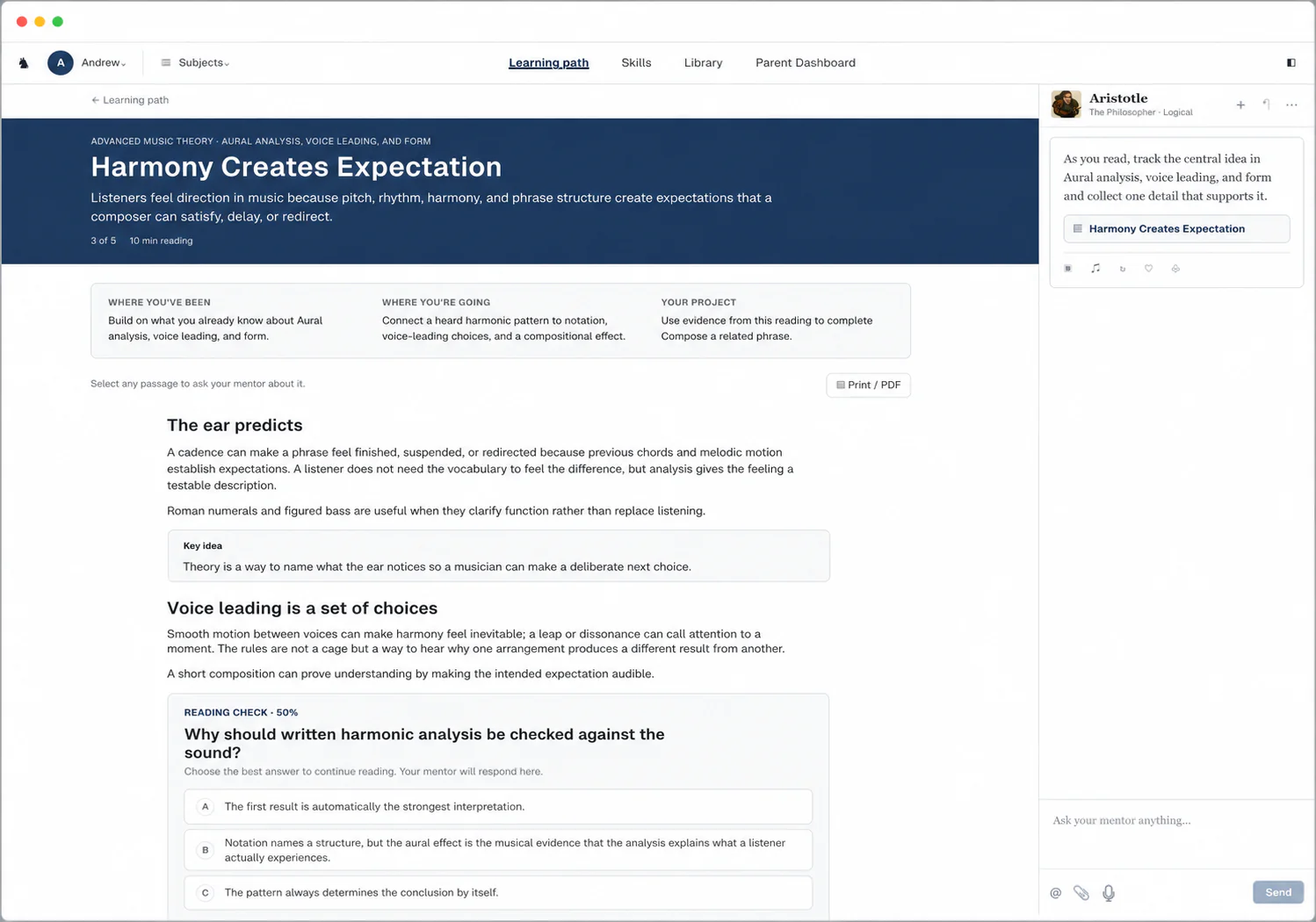
Listeners feel direction in music because pitch, rhythm, harmony, and phrase structure create expectations that a composer can satisfy, delay, or redirect.
- Lesson
- Harmony Creates Expectation
- Goal
- Connect a heard harmonic pattern to notation, voice-leading choices, and a compositional effect.
How a lesson works
A 10-minute reading
This example lesson comes from the unit on aural analysis, voice leading, and form. It moves from “The ear predicts” to “Voice leading is a set of choices” and builds to one idea: theory is a way to name what the ear notices so a musician can make a deliberate next choice.
Help inside the reading
Any line of “Harmony Creates Expectation” can go to our Always-On Mentor: your child highlights it to ask a question, and the mentor can draw the idea step by step on its board or, after a missed answer, explain it another way.
A check halfway through
Your child answers “Why should written harmonic analysis be checked against the sound?” before reading on, and the Reading Check at the end asks new questions.
A project your child hands in
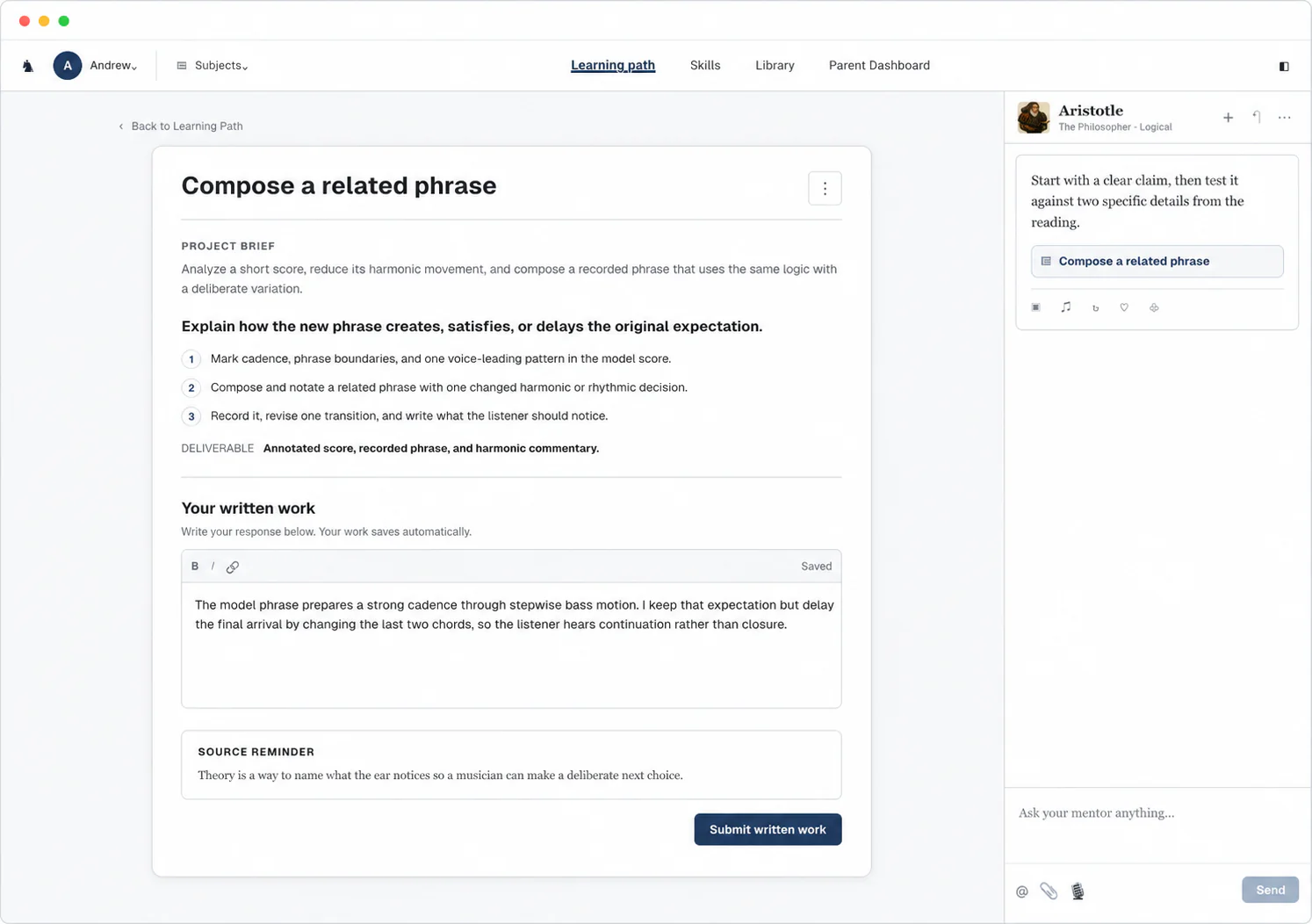
Analyze a short score, reduce its harmonic movement, and compose a recorded phrase that uses the same logic with a deliberate variation.
- Task
- Explain how the new phrase creates, satisfies, or delays the original expectation
- Hand in
- Annotated score, recorded phrase, and harmonic commentary
Practice, with a record of the work
Expect frequent listening and notation practice. The course includes dictation, sight singing, harmony, and voice leading, and each piece is graded with written feedback as soon as it is submitted. Advanced Music Theory runs through 20 units and 100 skills, starting with pitch and notation; rhythm and meter; and scales, keys, and modes.
- Notated melodic and harmonic dictation
- Recorded sight-singing practice
- Harmonizations and score analyses with corrections
Units and skills
Advanced Music Theory20 units · 100 skills
Pitch and notation5 skills
- Analyze formal choices and relationships in Pitch and notation
- Explain how context, purpose, and audience shape Pitch and notation
- Develop and test an original inquiry through Pitch and notation
- Document experimentation, critique, and revision in Pitch and notation
- Select, justify, and present evidence of mastery in Pitch and notation
Rhythm and meter5 skills
- Analyze formal choices and relationships in Rhythm and meter
- Explain how context, purpose, and audience shape Rhythm and meter
- Develop and test an original inquiry through Rhythm and meter
- Document experimentation, critique, and revision in Rhythm and meter
- Select, justify, and present evidence of mastery in Rhythm and meter
Scales, keys, and modes5 skills
- Analyze formal choices and relationships in Scales, keys, and modes
- Explain how context, purpose, and audience shape Scales, keys, and modes
- Develop and test an original inquiry through Scales, keys, and modes
- Document experimentation, critique, and revision in Scales, keys, and modes
- Select, justify, and present evidence of mastery in Scales, keys, and modes
Intervals and chords5 skills
- Analyze formal choices and relationships in Intervals and chords
- Explain how context, purpose, and audience shape Intervals and chords
- Develop and test an original inquiry through Intervals and chords
- Document experimentation, critique, and revision in Intervals and chords
- Select, justify, and present evidence of mastery in Intervals and chords
Voice leading5 skills
- Analyze formal choices and relationships in Voice leading
- Explain how context, purpose, and audience shape Voice leading
- Develop and test an original inquiry through Voice leading
- Document experimentation, critique, and revision in Voice leading
- Select, justify, and present evidence of mastery in Voice leading
Harmonic progression5 skills
- Analyze formal choices and relationships in Harmonic progression
- Explain how context, purpose, and audience shape Harmonic progression
- Develop and test an original inquiry through Harmonic progression
- Document experimentation, critique, and revision in Harmonic progression
- Select, justify, and present evidence of mastery in Harmonic progression
Cadences and phrase structure5 skills
- Analyze formal choices and relationships in Cadences and phrase structure
- Explain how context, purpose, and audience shape Cadences and phrase structure
- Develop and test an original inquiry through Cadences and phrase structure
- Document experimentation, critique, and revision in Cadences and phrase structure
- Select, justify, and present evidence of mastery in Cadences and phrase structure
Form and texture5 skills
- Analyze formal choices and relationships in Form and texture
- Explain how context, purpose, and audience shape Form and texture
- Develop and test an original inquiry through Form and texture
- Document experimentation, critique, and revision in Form and texture
- Select, justify, and present evidence of mastery in Form and texture
Aural dictation5 skills
- Analyze formal choices and relationships in Aural dictation
- Explain how context, purpose, and audience shape Aural dictation
- Develop and test an original inquiry through Aural dictation
- Document experimentation, critique, and revision in Aural dictation
- Select, justify, and present evidence of mastery in Aural dictation
Sight singing5 skills
- Analyze formal choices and relationships in Sight singing
- Explain how context, purpose, and audience shape Sight singing
- Develop and test an original inquiry through Sight singing
- Document experimentation, critique, and revision in Sight singing
- Select, justify, and present evidence of mastery in Sight singing
Composition and harmonization5 skills
- Analyze formal choices and relationships in Composition and harmonization
- Explain how context, purpose, and audience shape Composition and harmonization
- Develop and test an original inquiry through Composition and harmonization
- Document experimentation, critique, and revision in Composition and harmonization
- Select, justify, and present evidence of mastery in Composition and harmonization
Integrated score analysis5 skills
- Analyze formal choices and relationships in Integrated score analysis
- Explain how context, purpose, and audience shape Integrated score analysis
- Develop and test an original inquiry through Integrated score analysis
- Document experimentation, critique, and revision in Integrated score analysis
- Select, justify, and present evidence of mastery in Integrated score analysis
Aural analysis5 skills
- Analyze formal choices and relationships in Aural analysis
- Explain how context, purpose, and audience shape Aural analysis
- Develop and test an original inquiry through Aural analysis
- Document experimentation, critique, and revision in Aural analysis
- Select, justify, and present evidence of mastery in Aural analysis
Notated response5 skills
- Analyze formal choices and relationships in Notated response
- Explain how context, purpose, and audience shape Notated response
- Develop and test an original inquiry through Notated response
- Document experimentation, critique, and revision in Notated response
- Select, justify, and present evidence of mastery in Notated response
Recorded musical performance5 skills
- Analyze formal choices and relationships in Recorded musical performance
- Explain how context, purpose, and audience shape Recorded musical performance
- Develop and test an original inquiry through Recorded musical performance
- Document experimentation, critique, and revision in Recorded musical performance
- Select, justify, and present evidence of mastery in Recorded musical performance
Sustained artifact development5 skills
- Analyze formal choices and relationships in Sustained artifact development
- Explain how context, purpose, and audience shape Sustained artifact development
- Develop and test an original inquiry through Sustained artifact development
- Document experimentation, critique, and revision in Sustained artifact development
- Select, justify, and present evidence of mastery in Sustained artifact development
Selection, reflection, and presentation5 skills
- Analyze formal choices and relationships in Selection, reflection, and presentation
- Explain how context, purpose, and audience shape Selection, reflection, and presentation
- Develop and test an original inquiry through Selection, reflection, and presentation
- Document experimentation, critique, and revision in Selection, reflection, and presentation
- Select, justify, and present evidence of mastery in Selection, reflection, and presentation
Advanced Music Theory cumulative assessment5 skills
- Analyze formal choices and relationships in Advanced Music Theory cumulative assessment
- Explain how context, purpose, and audience shape Advanced Music Theory cumulative assessment
- Develop and test an original inquiry through Advanced Music Theory cumulative assessment
- Document experimentation, critique, and revision in Advanced Music Theory cumulative assessment
- Select, justify, and present evidence of mastery in Advanced Music Theory cumulative assessment
Advanced Music Theory exam-mode practice5 skills
- Analyze formal choices and relationships in Advanced Music Theory exam-mode practice
- Explain how context, purpose, and audience shape Advanced Music Theory exam-mode practice
- Develop and test an original inquiry through Advanced Music Theory exam-mode practice
- Document experimentation, critique, and revision in Advanced Music Theory exam-mode practice
- Select, justify, and present evidence of mastery in Advanced Music Theory exam-mode practice
Advanced Music Theory reflection and transfer5 skills
- Analyze formal choices and relationships in Advanced Music Theory reflection and transfer
- Explain how context, purpose, and audience shape Advanced Music Theory reflection and transfer
- Develop and test an original inquiry through Advanced Music Theory reflection and transfer
- Document experimentation, critique, and revision in Advanced Music Theory reflection and transfer
- Select, justify, and present evidence of mastery in Advanced Music Theory reflection and transfer
Questions parents ask
How does Advanced Music Theory prepare my student for AP Music Theory?
- Advanced Music Theory follows the AP Music Theory framework unit by unit, as its skill tree shows. Your teen explains and applies the ideas in written responses and projects, so the work shows which skills are secure and which need more practice.
How does a homeschooler register for an AP exam?
- An AP coordinator at an AP-authorized local school arranges registration. Use College Board’s homeschool exam guidance to find a host school. That school sets its deadlines and outside-student policies; its coordinator orders the exam, collects fees, and tells your child where and when to test.
Which course title goes on a homeschool transcript?
- Advanced Music Theory, not AP Music Theory. The AP designation requires College Board Course Audit authorization of the course, which framework alignment does not give. We generate the transcript with that title, ready for you to sign as homeschool administrator.
How can AP scores earn college credit?
- Colleges award credit under their own AP score policies. College Board reports scores on a 1–5 scale, separately from our coursework grades; check the college’s required score and whether it grants credit, placement, or both.
Advanced Music Theory, with the teaching and records handled
$49/month after the trial.