Advanced Psychology homeschool curriculum.
Your student studies behavior through research methods, psychology findings, ethics, and data.
A personalized lesson from the course
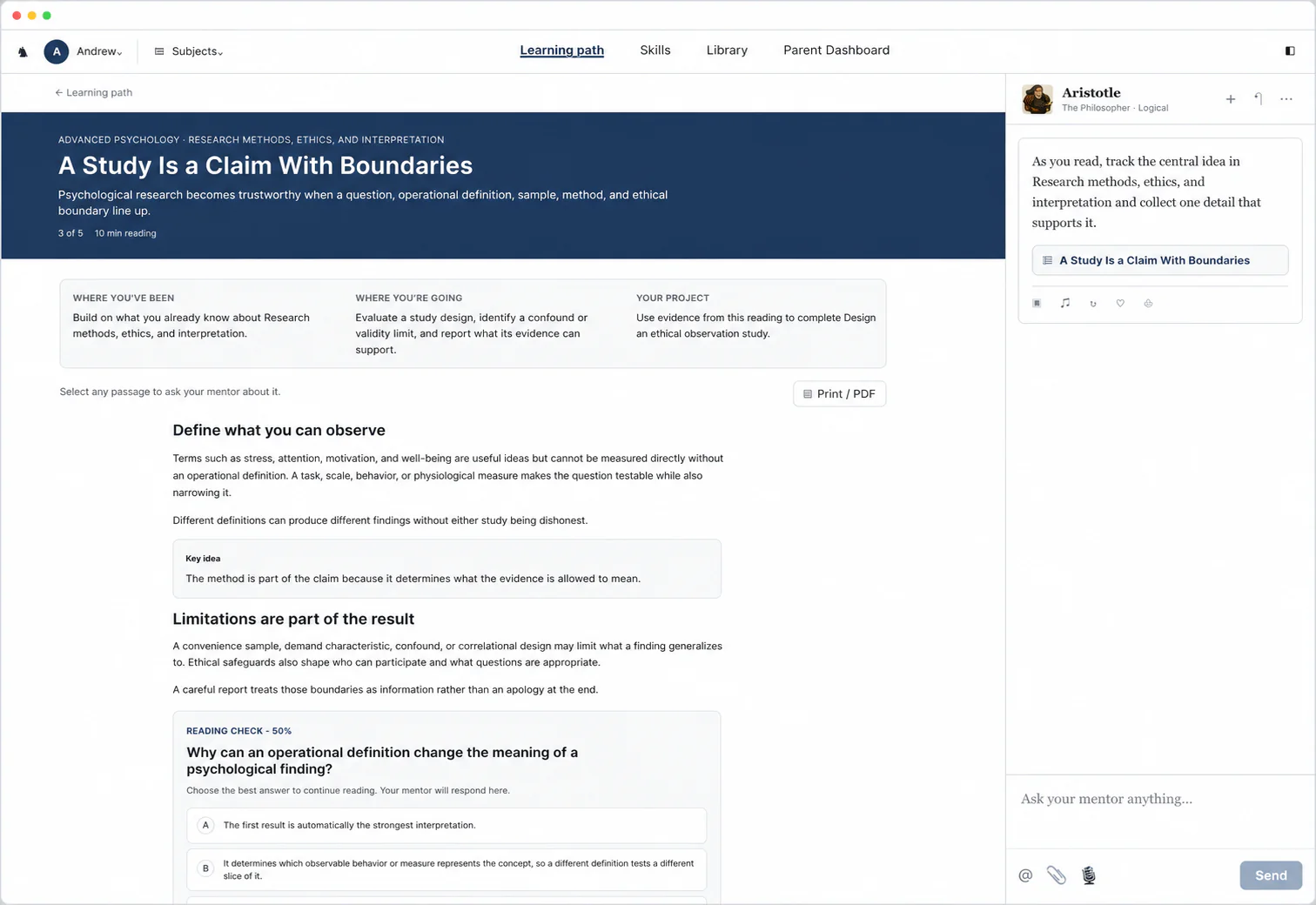
Psychological research becomes trustworthy when a question, operational definition, sample, method, and ethical boundary line up.
- Lesson
- A Study Is a Claim With Boundaries
- Goal
- Evaluate a study design, identify a confound or validity limit, and report what its evidence can support.
How a lesson works
A 10-minute reading
This example lesson comes from the unit on research methods, ethics, and interpretation. It moves from “Define what you can observe” to “Limitations are part of the result” and builds to one idea: the method is part of the claim because it determines what the evidence is allowed to mean.
Help inside the reading
Any line of “A Study Is a Claim With Boundaries” can go to our Always-On Mentor: your child highlights it to ask a question, and the mentor can draw the idea step by step on its board or, after a missed answer, explain it another way.
A check halfway through
Your child answers “Why can an operational definition change the meaning of a psychological finding?” before reading on, and the Reading Check at the end asks new questions.
A project your child hands in
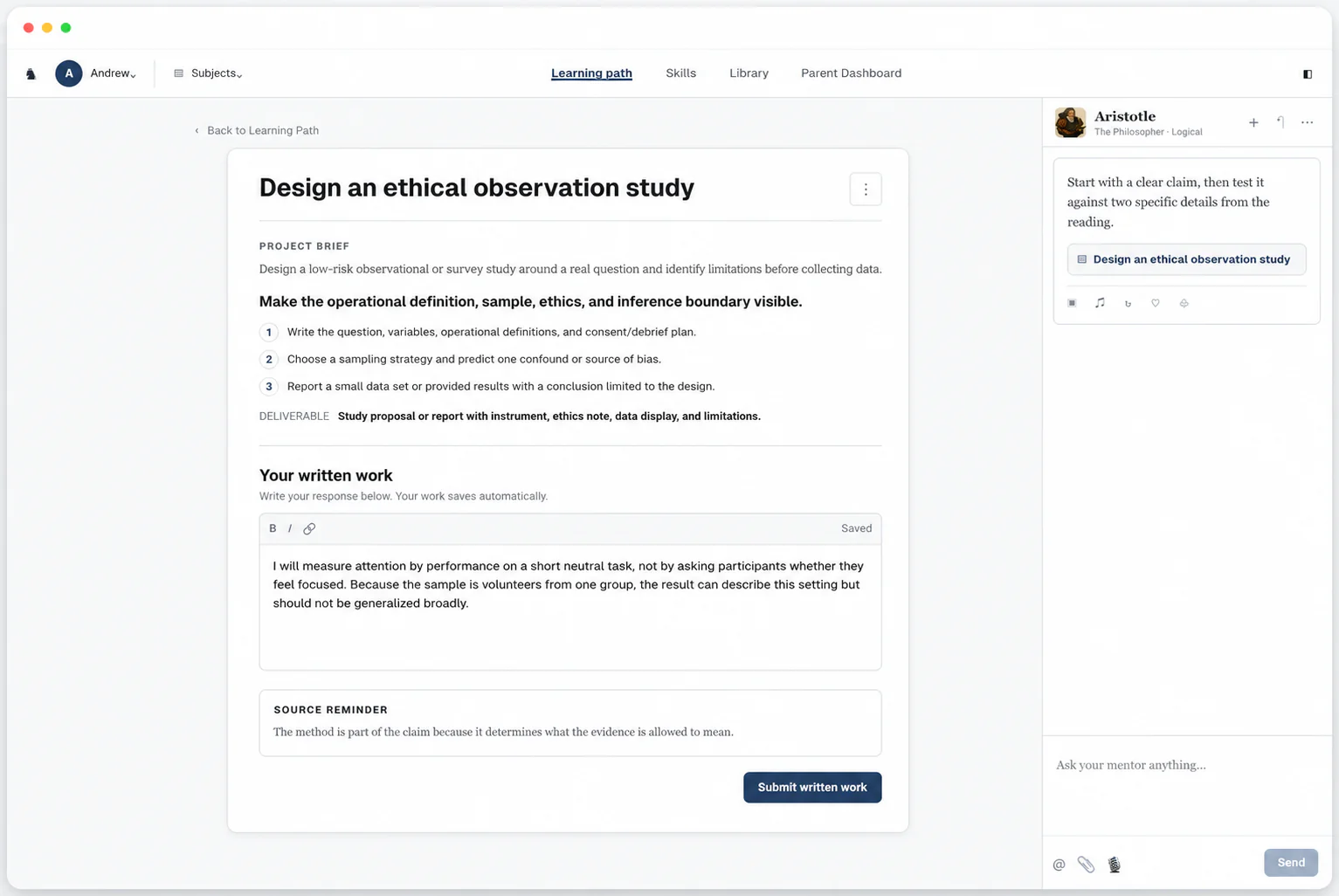
Design a low-risk observational or survey study around a real question and identify limitations before collecting data.
- Task
- Make the operational definition, sample, ethics, and inference boundary visible
- Hand in
- Study proposal or report with instrument, ethics note, data display, and limitations
Arguments backed by evidence
Each concept lesson is paired with a study, a methods question, and an explanation that does not claim more than the evidence supports. Advanced Psychology runs through 23 units and 92 skills, starting with biological bases of behavior, cognition, and development and learning.
- Study and article analyses
- Experimental-design responses
- Evidence-based explanations using psychological concepts
Units and skills
Advanced Psychology23 units · 92 skills
Biological bases of behavior4 skills
- Apply psychological concepts and theories to Biological bases of behavior
- Evaluate research methods and design involving Biological bases of behavior
- Interpret psychological data connected to Biological bases of behavior
- Develop an evidence-based psychological argument about Biological bases of behavior
Cognition4 skills
- Apply psychological concepts and theories to Cognition
- Evaluate research methods and design involving Cognition
- Interpret psychological data connected to Cognition
- Develop an evidence-based psychological argument about Cognition
Development and learning4 skills
- Apply psychological concepts and theories to Development and learning
- Evaluate research methods and design involving Development and learning
- Interpret psychological data connected to Development and learning
- Develop an evidence-based psychological argument about Development and learning
Social psychology and personality4 skills
- Apply psychological concepts and theories to Social psychology and personality
- Evaluate research methods and design involving Social psychology and personality
- Interpret psychological data connected to Social psychology and personality
- Develop an evidence-based psychological argument about Social psychology and personality
Mental and physical health4 skills
- Apply psychological concepts and theories to Mental and physical health
- Evaluate research methods and design involving Mental and physical health
- Interpret psychological data connected to Mental and physical health
- Develop an evidence-based psychological argument about Mental and physical health
Research methods4 skills
- Apply psychological concepts and theories to Research methods
- Evaluate research methods and design involving Research methods
- Interpret psychological data connected to Research methods
- Develop an evidence-based psychological argument about Research methods
Experimental design4 skills
- Apply psychological concepts and theories to Experimental design
- Evaluate research methods and design involving Experimental design
- Interpret psychological data connected to Experimental design
- Develop an evidence-based psychological argument about Experimental design
Ethics and participant protection4 skills
- Apply psychological concepts and theories to Ethics and participant protection
- Evaluate research methods and design involving Ethics and participant protection
- Interpret psychological data connected to Ethics and participant protection
- Develop an evidence-based psychological argument about Ethics and participant protection
Data interpretation4 skills
- Apply psychological concepts and theories to Data interpretation
- Evaluate research methods and design involving Data interpretation
- Interpret psychological data connected to Data interpretation
- Develop an evidence-based psychological argument about Data interpretation
Article analysis4 skills
- Apply psychological concepts and theories to Article analysis
- Evaluate research methods and design involving Article analysis
- Interpret psychological data connected to Article analysis
- Develop an evidence-based psychological argument about Article analysis
Evidence-based question4 skills
- Apply psychological concepts and theories to Evidence-based question
- Evaluate research methods and design involving Evidence-based question
- Interpret psychological data connected to Evidence-based question
- Develop an evidence-based psychological argument about Evidence-based question
Cumulative psychological explanation4 skills
- Apply psychological concepts and theories to Cumulative psychological explanation
- Evaluate research methods and design involving Cumulative psychological explanation
- Interpret psychological data connected to Cumulative psychological explanation
- Develop an evidence-based psychological argument about Cumulative psychological explanation
Source credibility and provenance4 skills
- Apply psychological concepts and theories to Source credibility and provenance
- Evaluate research methods and design involving Source credibility and provenance
- Interpret psychological data connected to Source credibility and provenance
- Develop an evidence-based psychological argument about Source credibility and provenance
Claim, evidence, and reasoning4 skills
- Apply psychological concepts and theories to Claim, evidence, and reasoning
- Evaluate research methods and design involving Claim, evidence, and reasoning
- Interpret psychological data connected to Claim, evidence, and reasoning
- Develop an evidence-based psychological argument about Claim, evidence, and reasoning
Counterargument and qualification4 skills
- Apply psychological concepts and theories to Counterargument and qualification
- Evaluate research methods and design involving Counterargument and qualification
- Interpret psychological data connected to Counterargument and qualification
- Develop an evidence-based psychological argument about Counterargument and qualification
Multiple quantitative representations4 skills
- Apply psychological concepts and theories to Multiple quantitative representations
- Evaluate research methods and design involving Multiple quantitative representations
- Interpret psychological data connected to Multiple quantitative representations
- Develop an evidence-based psychological argument about Multiple quantitative representations
Graph construction and interpretation4 skills
- Apply psychological concepts and theories to Graph construction and interpretation
- Evaluate research methods and design involving Graph construction and interpretation
- Interpret psychological data connected to Graph construction and interpretation
- Develop an evidence-based psychological argument about Graph construction and interpretation
Written mathematical justification4 skills
- Apply psychological concepts and theories to Written mathematical justification
- Evaluate research methods and design involving Written mathematical justification
- Interpret psychological data connected to Written mathematical justification
- Develop an evidence-based psychological argument about Written mathematical justification
Research ethics and design4 skills
- Apply psychological concepts and theories to Research ethics and design
- Evaluate research methods and design involving Research ethics and design
- Interpret psychological data connected to Research ethics and design
- Develop an evidence-based psychological argument about Research ethics and design
Evidence quality and limitations4 skills
- Apply psychological concepts and theories to Evidence quality and limitations
- Evaluate research methods and design involving Evidence quality and limitations
- Interpret psychological data connected to Evidence quality and limitations
- Develop an evidence-based psychological argument about Evidence quality and limitations
Advanced Psychology cumulative assessment4 skills
- Apply psychological concepts and theories to Advanced Psychology cumulative assessment
- Evaluate research methods and design involving Advanced Psychology cumulative assessment
- Interpret psychological data connected to Advanced Psychology cumulative assessment
- Develop an evidence-based psychological argument about Advanced Psychology cumulative assessment
Advanced Psychology exam-mode practice4 skills
- Apply psychological concepts and theories to Advanced Psychology exam-mode practice
- Evaluate research methods and design involving Advanced Psychology exam-mode practice
- Interpret psychological data connected to Advanced Psychology exam-mode practice
- Develop an evidence-based psychological argument about Advanced Psychology exam-mode practice
Advanced Psychology reflection and transfer4 skills
- Apply psychological concepts and theories to Advanced Psychology reflection and transfer
- Evaluate research methods and design involving Advanced Psychology reflection and transfer
- Interpret psychological data connected to Advanced Psychology reflection and transfer
- Develop an evidence-based psychological argument about Advanced Psychology reflection and transfer
Questions parents ask
How does Advanced Psychology prepare my student for AP Psychology?
- Advanced Psychology follows the AP Psychology framework unit by unit, as its skill tree shows. Your teen explains and applies the ideas in written responses and projects, so the work shows which skills are secure and which need more practice.
How does a homeschooler register for an AP exam?
- An AP coordinator at an AP-authorized local school arranges registration. Use College Board’s homeschool exam guidance to find a host school. That school sets its deadlines and outside-student policies; its coordinator orders the exam, collects fees, and tells your child where and when to test.
Which course title goes on a homeschool transcript?
- Advanced Psychology, not AP Psychology. The AP designation requires College Board Course Audit authorization of the course, which framework alignment does not give. We generate the transcript with that title, ready for you to sign as homeschool administrator.
How can AP scores earn college credit?
- Colleges award credit under their own AP score policies. College Board reports scores on a 1–5 scale, separately from our coursework grades; check the college’s required score and whether it grants credit, placement, or both.
Advanced Psychology, with the teaching and records handled
$49/month after the trial.