Advanced Research homeschool curriculum.
Your student takes one research question through a literature review, method, evidence, paper, and oral defense.
A personalized lesson from the course
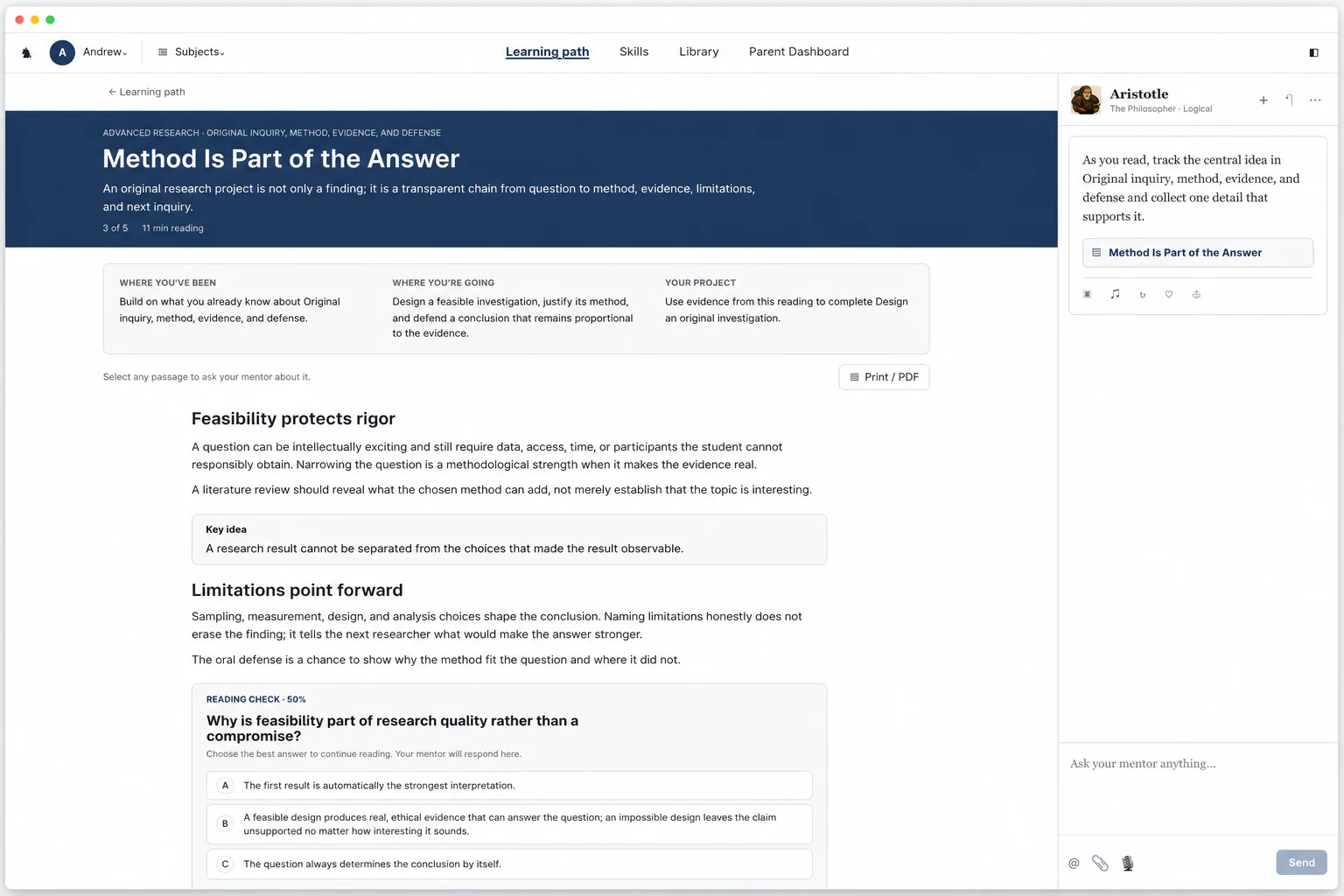
An original research project is not only a finding; it is a transparent chain from question to method, evidence, limitations, and next inquiry.
- Lesson
- Method Is Part of the Answer
- Goal
- Design a feasible investigation, justify its method, and defend a conclusion that remains proportional to the evidence.
How a lesson works
An 11-minute reading
This example lesson comes from the unit on original inquiry, method, evidence, and defense. It moves from “Feasibility protects rigor” to “Limitations point forward” and builds to one idea: a research result cannot be separated from the choices that made the result observable.
Help inside the reading
Our Always-On Mentor stays beside “Method Is Part of the Answer” the whole way through, answering questions about any highlighted line and, during the Reading Check, clarifying a question without giving the answer away.
A check halfway through
Your child answers “Why is feasibility part of research quality rather than a compromise?” before reading on, and the Reading Check at the end asks new questions.
A project your child hands in
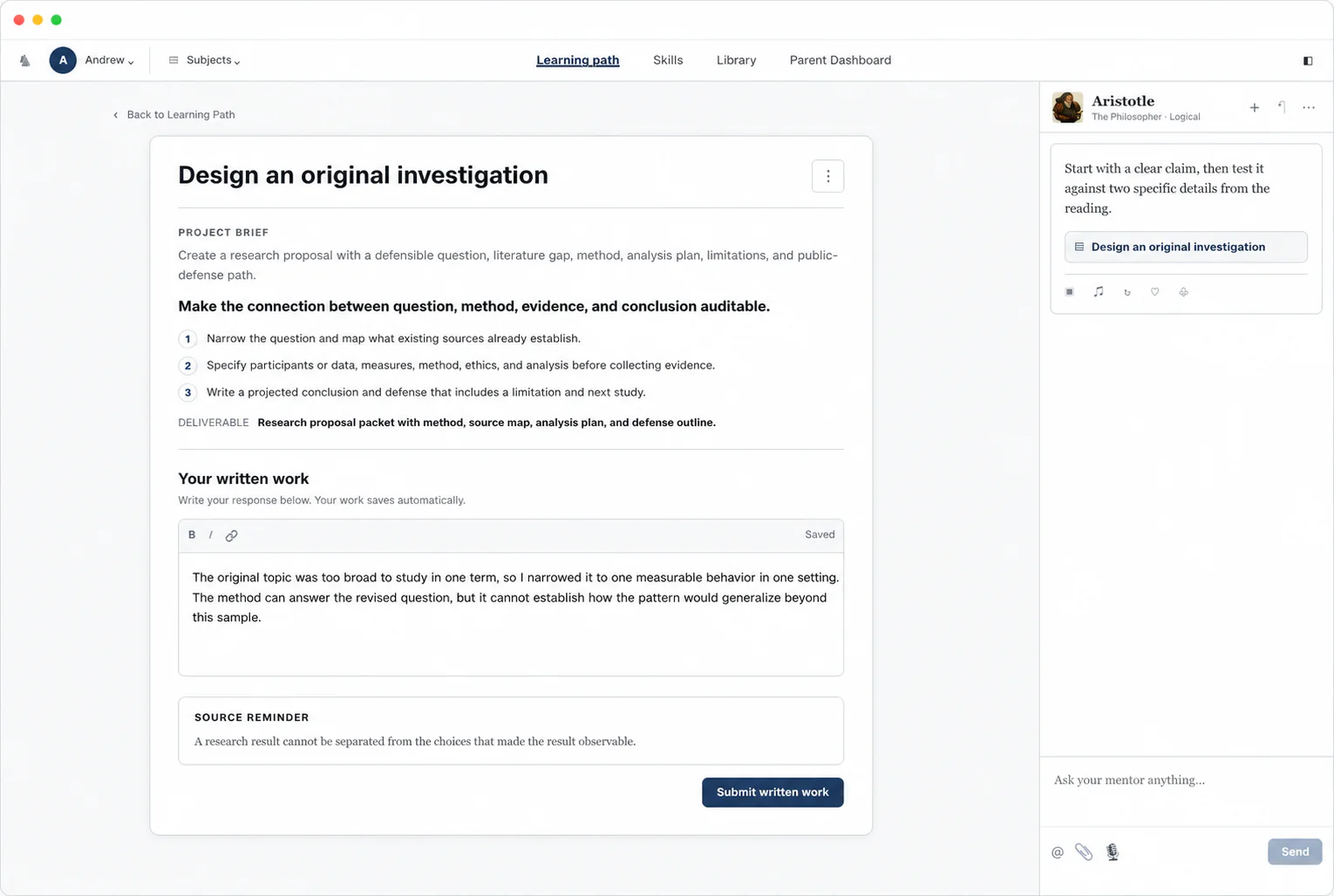
Create a research proposal with a defensible question, literature gap, method, analysis plan, limitations, and public-defense path.
- Task
- Make the connection between question, method, evidence, and conclusion auditable
- Hand in
- Research proposal packet with method, source map, analysis plan, and defense outline
Keep the inquiry moving
Research milestones run through the year, and checkpoints help keep the topic manageable and the research appropriate. Advanced Research runs through 26 units and 156 skills, starting with research topic and problem, literature review, and research question.
- Proposal and process portfolio
- A substantial academic paper
- Presentation and oral defense
Units and skills
Advanced Research26 units · 156 skills
Research topic and problem6 skills
- Develop and refine a researchable question within Research topic and problem
- Evaluate credibility, relevance, and limitations of evidence in Research topic and problem
- Synthesize competing perspectives related to Research topic and problem
- Design and justify an ethical inquiry involving Research topic and problem
- Construct a sustained academic argument about Research topic and problem
- Present and orally defend decisions and conclusions in Research topic and problem
Literature review6 skills
- Develop and refine a researchable question within Literature review
- Evaluate credibility, relevance, and limitations of evidence in Literature review
- Synthesize competing perspectives related to Literature review
- Design and justify an ethical inquiry involving Literature review
- Construct a sustained academic argument about Literature review
- Present and orally defend decisions and conclusions in Literature review
Research question6 skills
- Develop and refine a researchable question within Research question
- Evaluate credibility, relevance, and limitations of evidence in Research question
- Synthesize competing perspectives related to Research question
- Design and justify an ethical inquiry involving Research question
- Construct a sustained academic argument about Research question
- Present and orally defend decisions and conclusions in Research question
Method selection6 skills
- Develop and refine a researchable question within Method selection
- Evaluate credibility, relevance, and limitations of evidence in Method selection
- Synthesize competing perspectives related to Method selection
- Design and justify an ethical inquiry involving Method selection
- Construct a sustained academic argument about Method selection
- Present and orally defend decisions and conclusions in Method selection
Ethics and feasibility6 skills
- Develop and refine a researchable question within Ethics and feasibility
- Evaluate credibility, relevance, and limitations of evidence in Ethics and feasibility
- Synthesize competing perspectives related to Ethics and feasibility
- Design and justify an ethical inquiry involving Ethics and feasibility
- Construct a sustained academic argument about Ethics and feasibility
- Present and orally defend decisions and conclusions in Ethics and feasibility
Proposal development6 skills
- Develop and refine a researchable question within Proposal development
- Evaluate credibility, relevance, and limitations of evidence in Proposal development
- Synthesize competing perspectives related to Proposal development
- Design and justify an ethical inquiry involving Proposal development
- Construct a sustained academic argument about Proposal development
- Present and orally defend decisions and conclusions in Proposal development
Data or evidence collection6 skills
- Develop and refine a researchable question within Data or evidence collection
- Evaluate credibility, relevance, and limitations of evidence in Data or evidence collection
- Synthesize competing perspectives related to Data or evidence collection
- Design and justify an ethical inquiry involving Data or evidence collection
- Construct a sustained academic argument about Data or evidence collection
- Present and orally defend decisions and conclusions in Data or evidence collection
Analysis6 skills
- Develop and refine a researchable question within Analysis
- Evaluate credibility, relevance, and limitations of evidence in Analysis
- Synthesize competing perspectives related to Analysis
- Design and justify an ethical inquiry involving Analysis
- Construct a sustained academic argument about Analysis
- Present and orally defend decisions and conclusions in Analysis
Limitations6 skills
- Develop and refine a researchable question within Limitations
- Evaluate credibility, relevance, and limitations of evidence in Limitations
- Synthesize competing perspectives related to Limitations
- Design and justify an ethical inquiry involving Limitations
- Construct a sustained academic argument about Limitations
- Present and orally defend decisions and conclusions in Limitations
Academic paper6 skills
- Develop and refine a researchable question within Academic paper
- Evaluate credibility, relevance, and limitations of evidence in Academic paper
- Synthesize competing perspectives related to Academic paper
- Design and justify an ethical inquiry involving Academic paper
- Construct a sustained academic argument about Academic paper
- Present and orally defend decisions and conclusions in Academic paper
Presentation6 skills
- Develop and refine a researchable question within Presentation
- Evaluate credibility, relevance, and limitations of evidence in Presentation
- Synthesize competing perspectives related to Presentation
- Design and justify an ethical inquiry involving Presentation
- Construct a sustained academic argument about Presentation
- Present and orally defend decisions and conclusions in Presentation
Oral defense6 skills
- Develop and refine a researchable question within Oral defense
- Evaluate credibility, relevance, and limitations of evidence in Oral defense
- Synthesize competing perspectives related to Oral defense
- Design and justify an ethical inquiry involving Oral defense
- Construct a sustained academic argument about Oral defense
- Present and orally defend decisions and conclusions in Oral defense
Source credibility and provenance6 skills
- Develop and refine a researchable question within Source credibility and provenance
- Evaluate credibility, relevance, and limitations of evidence in Source credibility and provenance
- Synthesize competing perspectives related to Source credibility and provenance
- Design and justify an ethical inquiry involving Source credibility and provenance
- Construct a sustained academic argument about Source credibility and provenance
- Present and orally defend decisions and conclusions in Source credibility and provenance
Claim, evidence, and reasoning6 skills
- Develop and refine a researchable question within Claim, evidence, and reasoning
- Evaluate credibility, relevance, and limitations of evidence in Claim, evidence, and reasoning
- Synthesize competing perspectives related to Claim, evidence, and reasoning
- Design and justify an ethical inquiry involving Claim, evidence, and reasoning
- Construct a sustained academic argument about Claim, evidence, and reasoning
- Present and orally defend decisions and conclusions in Claim, evidence, and reasoning
Counterargument and qualification6 skills
- Develop and refine a researchable question within Counterargument and qualification
- Evaluate credibility, relevance, and limitations of evidence in Counterargument and qualification
- Synthesize competing perspectives related to Counterargument and qualification
- Design and justify an ethical inquiry involving Counterargument and qualification
- Construct a sustained academic argument about Counterargument and qualification
- Present and orally defend decisions and conclusions in Counterargument and qualification
Inquiry proposal and source approval6 skills
- Develop and refine a researchable question within Inquiry proposal and source approval
- Evaluate credibility, relevance, and limitations of evidence in Inquiry proposal and source approval
- Synthesize competing perspectives related to Inquiry proposal and source approval
- Design and justify an ethical inquiry involving Inquiry proposal and source approval
- Construct a sustained academic argument about Inquiry proposal and source approval
- Present and orally defend decisions and conclusions in Inquiry proposal and source approval
Research artifact, presentation, and defense6 skills
- Develop and refine a researchable question within Research artifact, presentation, and defense
- Evaluate credibility, relevance, and limitations of evidence in Research artifact, presentation, and defense
- Synthesize competing perspectives related to Research artifact, presentation, and defense
- Design and justify an ethical inquiry involving Research artifact, presentation, and defense
- Construct a sustained academic argument about Research artifact, presentation, and defense
- Present and orally defend decisions and conclusions in Research artifact, presentation, and defense
Sustained artifact development6 skills
- Develop and refine a researchable question within Sustained artifact development
- Evaluate credibility, relevance, and limitations of evidence in Sustained artifact development
- Synthesize competing perspectives related to Sustained artifact development
- Design and justify an ethical inquiry involving Sustained artifact development
- Construct a sustained academic argument about Sustained artifact development
- Present and orally defend decisions and conclusions in Sustained artifact development
Selection, reflection, and presentation6 skills
- Develop and refine a researchable question within Selection, reflection, and presentation
- Evaluate credibility, relevance, and limitations of evidence in Selection, reflection, and presentation
- Synthesize competing perspectives related to Selection, reflection, and presentation
- Design and justify an ethical inquiry involving Selection, reflection, and presentation
- Construct a sustained academic argument about Selection, reflection, and presentation
- Present and orally defend decisions and conclusions in Selection, reflection, and presentation
Facilitated scholarly dialogue6 skills
- Develop and refine a researchable question within Facilitated scholarly dialogue
- Evaluate credibility, relevance, and limitations of evidence in Facilitated scholarly dialogue
- Synthesize competing perspectives related to Facilitated scholarly dialogue
- Design and justify an ethical inquiry involving Facilitated scholarly dialogue
- Construct a sustained academic argument about Facilitated scholarly dialogue
- Present and orally defend decisions and conclusions in Facilitated scholarly dialogue
Collaborative and independent inquiry6 skills
- Develop and refine a researchable question within Collaborative and independent inquiry
- Evaluate credibility, relevance, and limitations of evidence in Collaborative and independent inquiry
- Synthesize competing perspectives related to Collaborative and independent inquiry
- Design and justify an ethical inquiry involving Collaborative and independent inquiry
- Construct a sustained academic argument about Collaborative and independent inquiry
- Present and orally defend decisions and conclusions in Collaborative and independent inquiry
Research ethics and design6 skills
- Develop and refine a researchable question within Research ethics and design
- Evaluate credibility, relevance, and limitations of evidence in Research ethics and design
- Synthesize competing perspectives related to Research ethics and design
- Design and justify an ethical inquiry involving Research ethics and design
- Construct a sustained academic argument about Research ethics and design
- Present and orally defend decisions and conclusions in Research ethics and design
Evidence quality and limitations6 skills
- Develop and refine a researchable question within Evidence quality and limitations
- Evaluate credibility, relevance, and limitations of evidence in Evidence quality and limitations
- Synthesize competing perspectives related to Evidence quality and limitations
- Design and justify an ethical inquiry involving Evidence quality and limitations
- Construct a sustained academic argument about Evidence quality and limitations
- Present and orally defend decisions and conclusions in Evidence quality and limitations
Advanced Research cumulative assessment6 skills
- Develop and refine a researchable question within Advanced Research cumulative assessment
- Evaluate credibility, relevance, and limitations of evidence in Advanced Research cumulative assessment
- Synthesize competing perspectives related to Advanced Research cumulative assessment
- Design and justify an ethical inquiry involving Advanced Research cumulative assessment
- Construct a sustained academic argument about Advanced Research cumulative assessment
- Present and orally defend decisions and conclusions in Advanced Research cumulative assessment
Advanced Research exam-mode practice6 skills
- Develop and refine a researchable question within Advanced Research exam-mode practice
- Evaluate credibility, relevance, and limitations of evidence in Advanced Research exam-mode practice
- Synthesize competing perspectives related to Advanced Research exam-mode practice
- Design and justify an ethical inquiry involving Advanced Research exam-mode practice
- Construct a sustained academic argument about Advanced Research exam-mode practice
- Present and orally defend decisions and conclusions in Advanced Research exam-mode practice
Advanced Research reflection and transfer6 skills
- Develop and refine a researchable question within Advanced Research reflection and transfer
- Evaluate credibility, relevance, and limitations of evidence in Advanced Research reflection and transfer
- Synthesize competing perspectives related to Advanced Research reflection and transfer
- Design and justify an ethical inquiry involving Advanced Research reflection and transfer
- Construct a sustained academic argument about Advanced Research reflection and transfer
- Present and orally defend decisions and conclusions in Advanced Research reflection and transfer
Questions parents ask
How does Advanced Research prepare my student for AP Research?
- Advanced Research follows the AP Research framework unit by unit, as its skill tree shows. Your teen explains and applies the ideas in written responses and projects, so the work shows which skills are secure and which need more practice.
What class access is required for an AP Seminar or AP Research score?
- An AP score requires a teacher-led class at a participating virtual or local school and AP coordinator assessment access; AP Research cannot be taken through independent study. It has no traditional end-of-course exam; enrollment here neither supplies that class nor submits assessment materials.
Which course title goes on a homeschool transcript?
- Advanced Research, not AP Research. The AP designation requires College Board Course Audit authorization of the course, which framework alignment does not give. We generate the transcript with that title, ready for you to sign as homeschool administrator.
How can AP scores earn college credit?
- Colleges award credit under their own AP score policies. College Board reports scores on a 1–5 scale, separately from our coursework grades; check the college’s required score and whether it grants credit, placement, or both.
Advanced Research, with the teaching and records handled
$49/month after the trial.