Music can be a serious part of a homeschool education without every practice session becoming paperwork. A few recordings, the pieces your child studied, and examples of theory or composition work can show much more than a bare list of practice hours.
Decide what the course includes
Performance, listening, theory, and composition overlap, but they are different kinds of work. A child studying piano might work on technique with an instructor, learn how chords function in a theory lesson, and use those chords in a short composition. The course description should say which of these the year actually included.
Make recordings useful
A dated recording near the beginning of work on a piece gives you something to compare with a later performance. A short note from the learner about what they were trying to improve, such as a steady pulse, a difficult transition, or phrasing, makes it more useful. The comparison is clearer when it concerns the same passage or a similar technical challenge.
Not every recording needs to be a polished performance. An early attempt can help the child hear a change they had stopped noticing during daily practice. Labeled with the title of the piece and the date, it stays useful later.
The written and listening work counts too
A score with the student's annotations, an explanation of a chord progression, or two versions of a short composition shows another side of learning. For a listening assignment, the useful part is what the student noticed and how they describe it, with enough detail to find the passage they mean.
How our music course fits
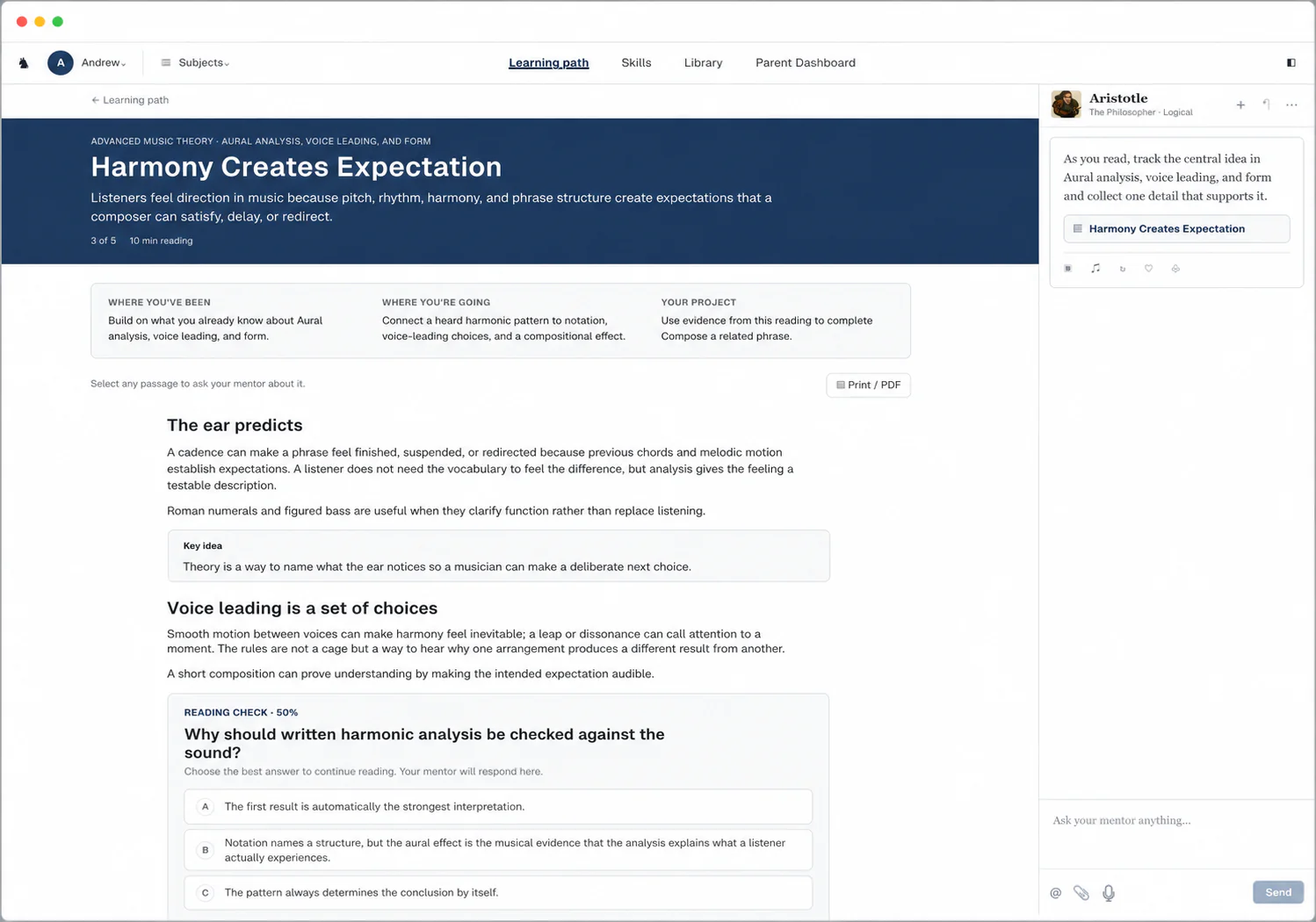
Our music coursework includes theory, listening, and creative work. The Always-On Mentor, software that stays open beside every lesson, answers questions about any passage your child highlights and can draw a hard idea step by step on its board. Each submission is graded as soon as your child turns it in, with written feedback, so you never grade it. Instrument lessons, ensemble participation, and practice remain arrangements your family makes. The online coursework and performance work can contribute different parts of the record.
We draft the high-school course description from what was actually studied and the basis for the grade. Our saved progress and exportable records cover work in the program, and recordings from outside lessons can sit alongside them.