Homeschooled children are not, as a group, socially behind. The research that exists finds their friendships and social behavior at least as healthy as those of children in school. What the myth misses is that school is one setting for social learning, not the only one. What it gets right is that a child learning at home needs other settings to do that work.
What socialization means
Socialization is learning to get along in society: reading social cues, working with others, handling disagreement, and talking with people unlike you. School is one place that happens, but it is not the only one. Classrooms often group children close in age; adult life usually mixes people across ages and roles.
What the research finds
One widely read summary is a 2013 review by Richard Medlin of Stetson University, published in the Peabody Journal of Education. Compared with children in conventional schools, he found, homeschooled children in the studies had higher-quality friendships and better relationships with their parents and other adults. As teenagers they showed less emotional turmoil and fewer problem behaviors, and homeschooled adults were civically engaged. He concluded that an alarmist view of homeschooling is not supported by the research.
Medlin was also plain about the limits. Many of the studies used non-random samples and small groups, compared families that already differed in other ways, and relied heavily on what parents and children reported about themselves. The fair reading is that homeschooling does not, by itself, harm a child's social development. It does not show that every homeschooled child is well connected; that depends on the life around them.
What social life looks like at 6, 10, and 15
At six, social learning happens mostly through play: taking turns, losing a game without falling apart, and working out how to join a group that is already playing. Short, frequent time with the same few children teaches more than an occasional large event. Mixed-age play helps here, since a younger child learns by copying and an older one gets practice leading.
At ten, friendships form around shared activities and a strong sense of fairness. Children this age care about rules, teams, and loyalty, and they start choosing friends for who they are rather than who is nearby. The skill that matters most is repair: falling out with a friend over a game and finding a way back by the next week.
At fifteen, peers matter more to identity than at any earlier age. Teenagers want time with people their own age without a parent in the room, a say in their own plans, and responsibilities to adults outside the family, such as a coach, a manager, or a volunteer coordinator. A teen with warm adult relationships but no friends their own age often feels that gap sharply.
What a classroom practices that home has to find elsewhere
A classroom gives children some social practice almost by accident. They work in groups they did not choose, take direction from an adult who is not their parent, wait their turn as one of twenty-five, and recover from a mistake made in front of others. None of this requires a school, but a child at home will only get it from settings that recreate it. A team supplies teammates they did not pick and a coach to answer to. A class outside the home supplies a teacher and an audience. A part-time job or volunteer shift supplies a supervisor and strangers to serve.
Where homeschoolers find it
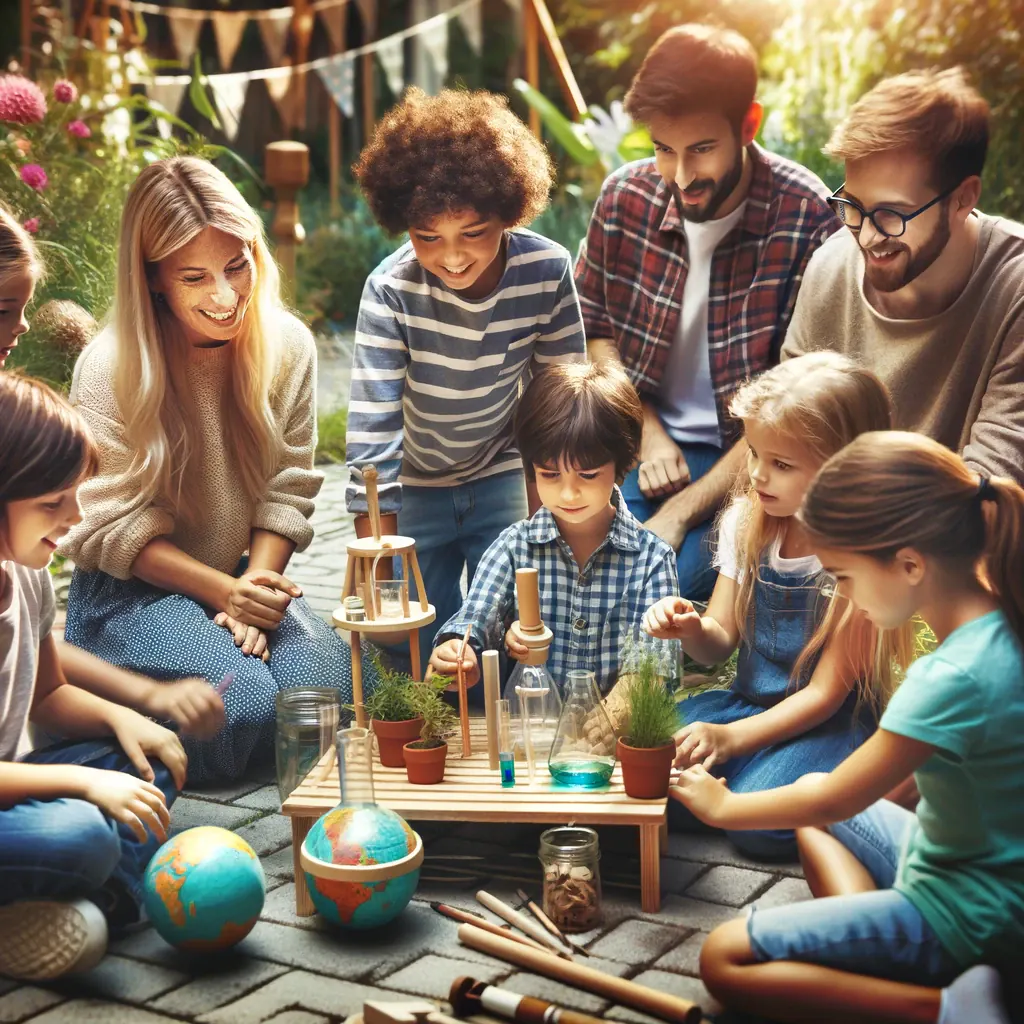
- Co-ops and community groups. Mixed-age groups where children collaborate and learn from older and younger peers.
- Sports teams, music, and art classes. Regular groups built around a shared interest.
- Volunteering and clubs. Contact with adults and people of different ages and backgrounds.
- Everyday life. Errands, neighbors, family, and jobs, which are how adults mostly practice it.
These settings can build real friendships around shared interests, not just who lives nearby or was born the same year. They also put children around adults who model mature conversation.
Give a friendship time to form
A new activity every week can mean meeting many people without getting to know any of them. A regular group gives children another chance after an awkward first meeting and a reason to continue a conversation. Ask your child who they would like to see again, then make room for that relationship outside the organized activity when possible.
The time it takes
Social time does not happen by itself. A homeschooled child who spends every day at home alone will have less contact than a classmate. The advantage is that you choose the settings, but you do have to choose them, and that takes hours in the week.
How we help
Our curriculum teaches the lessons, and each submission is graded as soon as your child turns it in, so grading never takes your hours. It does not supply friendships or replace time with other children. You can choose lesson times around a team, club, or group that matters to your child.
Watch how those activities feel to them. Being on a roster is different from having someone they look forward to seeing.

