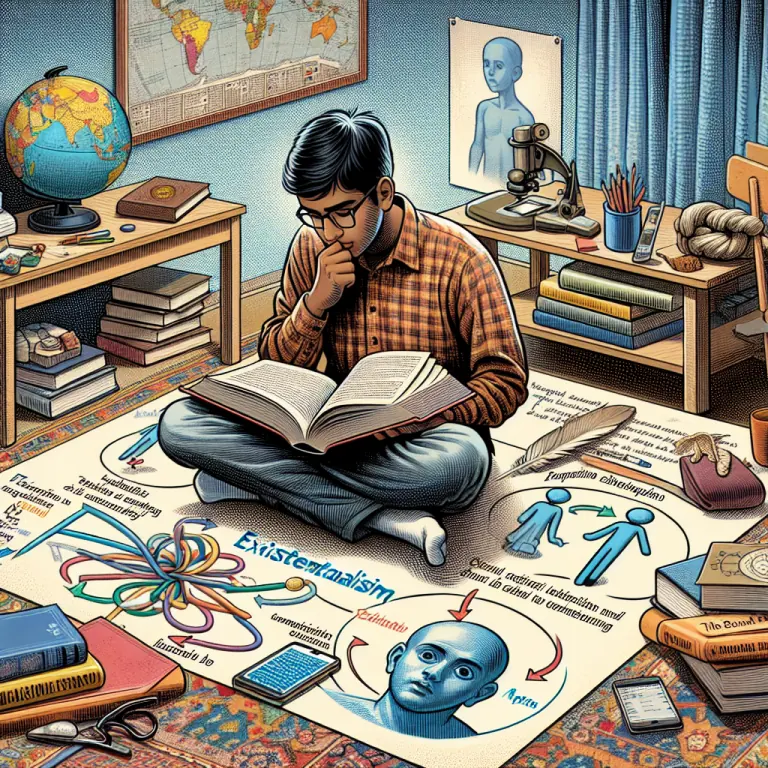
Teaching ethics means teaching a child to reason about right and wrong, not only to follow rules. Rules tell a child what to do in the cases someone already thought of. Reasoning prepares them for the cases nobody did.
Treat right and wrong as open for discussion
Children learn rules early, and they should. But a child who only has rules cannot handle two rules that conflict, or a situation the rules never covered. Ethics education adds the next layer: why a rule exists, who it protects, and what to do when it fails.
That means treating many ethical questions as open, at least for discussion. Is it ever right to lie to protect someone? What do you owe a friend who did something wrong? A child who has to give reasons, and hear the best objection, learns to hold a view for a reason, not by habit. This does not make every answer equal. Some arguments are better than others, and part of the practice is learning to tell which.
Stay with a case long enough to examine it
A child promises to keep a friend's secret, then learns that keeping it could let someone be harmed. The discussion can begin with what promises are for and why harm matters. It becomes more interesting when you ask which facts would change the decision. The child has to work out how two commitments fit together instead of repeating either rule by itself.
Consequences, duties, and character
Philosophers have argued about ethics for more than two thousand years, and three ideas come up again and again. Children already use all three; learning the names helps them see why a hard case pulls in two directions.
- Consequences. John Stuart Mill judged an action by its results for everyone affected. Applied to the secret: who gets hurt if I keep it, and who if I tell?
- Duties. Immanuel Kant held that some duties bind us whatever the outcome, and tested a rule by asking whether everyone could follow it. Applied to the secret: what happens to promises if everyone breaks them when it suits them?
- Character. Aristotle asked what a person of good character would do, and treated each virtue as a balance between too little and too much. Applied to the secret: what would a loyal friend do, and when does loyalty turn into covering for harm?
When the three lenses agree, the case is easy. When they disagree, the child has found the real ethical problem, and can see why thoughtful people land in different places.
Empathy comes from taking another view
Children can practice taking another person's perspective by describing what each person in a story wanted, feared, and lost. Literature and history offer choices and consequences to examine; discussing them does not guarantee empathy, but it gives a child a concrete case to reason through.

Ethics inside history, science, math, and writing
Ethics does not need its own hour. It already sits inside the other subjects, and it is often more vivid there.
- History. Whether the United States was justified in using the atomic bomb in 1945 is a case where the facts, the alternatives, and the values all matter.
- Science. Research on people raises consent: what does a volunteer need to know before agreeing to take part in an experiment?
- Math. A bar graph whose axis starts at 95 instead of 0 can make a 2-point difference look enormous. Every number on it is true, so is the graph honest?
- Writing. A persuasive essay raises its own case: is it fair to leave out the strongest point against your side, and what do you owe the writers whose ideas you borrowed?
What it looks like at 6, 10, and 15
At 6, ethics is mostly about fairness and intent. A child can tell the difference between breaking a toy on purpose and by accident, and can talk about whether the punishment should be the same. Short stories with one clear choice work best, along with the question of what the character could have done instead.
At 10, children notice that rules conflict. Telling on a friend, keeping a promise that has become a problem, and whether a team rule applies to the best player are the cases that hold their attention. They can compare two characters' reasons and say which reason is stronger.
At 15, the cases get larger: actions that were legal and still wrong, decisions that help many people and harm a few, choices made under uncertainty. A teenager can write an argument, state the best objection to it in terms the other side would accept, and answer it.
Dialogue is the method
Moral reasoning develops through questions: Why do you think that is fair? Who is affected? What would change your mind? What would you say to someone who disagreed? The questions matter more than the verdict, and the child does most of the talking.
The challenge is that this takes a patient partner who keeps asking, does not lecture, and does not just hand over a conclusion. It also works best on real dilemmas the child can connect to, not on abstract lists of principles.
What goes wrong, and what growth looks like
Three things usually derail ethics teaching. The adult supplies the verdict too early, and the child learns to guess the expected answer. The discussion slides into "everyone has their own opinion," which ends the thinking instead of starting it. Or a clever child learns to build a reason for whatever they already wanted to do, which is rationalizing, not reasoning.
Growth shows up in ordinary talk. The child names who is affected without being prompted. They notice when their own rule would treat a friend and a stranger differently, and ask whether that is fair. And now and then they change their mind, and can say which reason changed it.
How we handle it
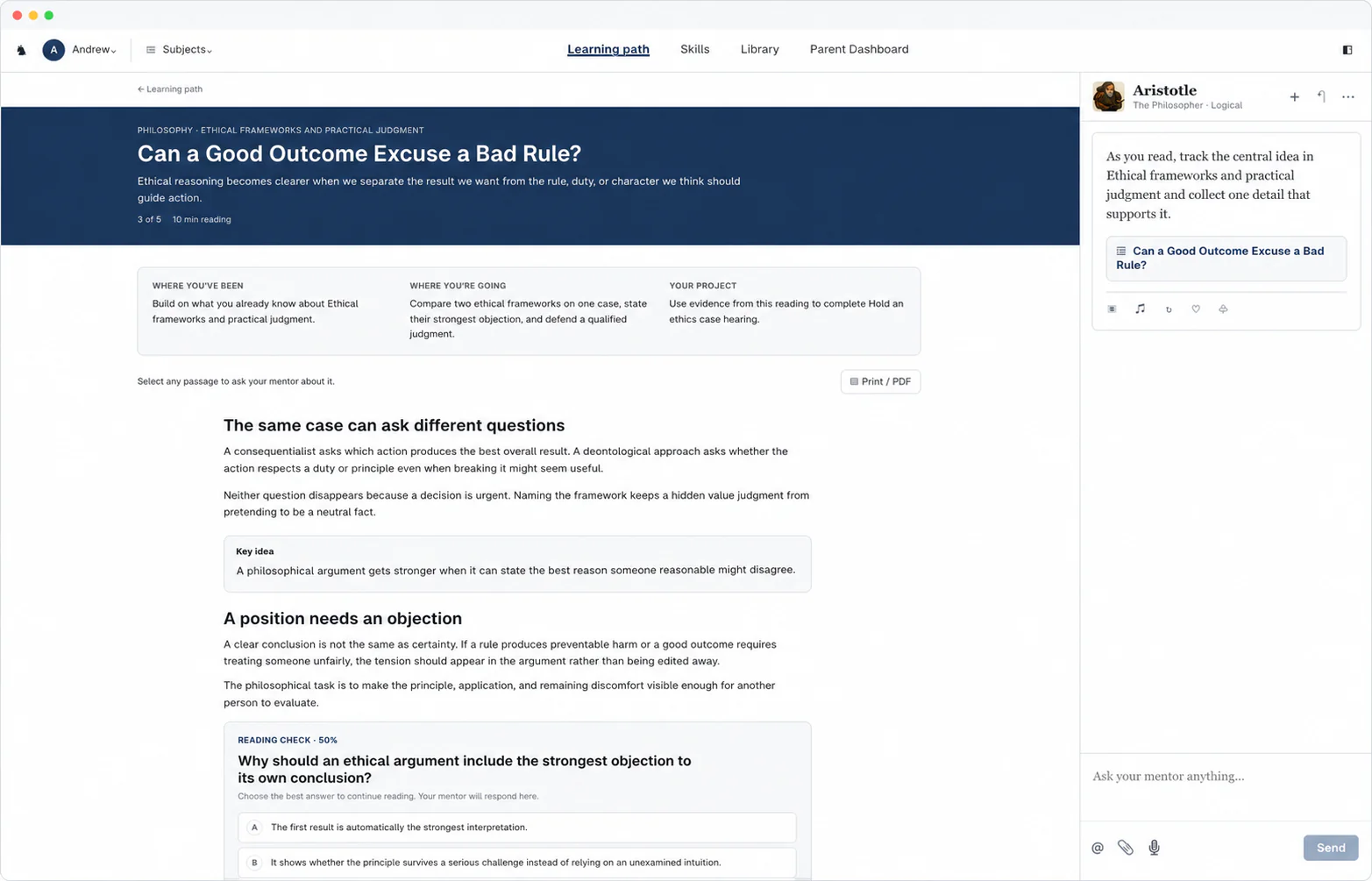
When a history or literature reading raises a hard choice, your child can highlight the passage and ask the Always-On Mentor, software that stays open beside every reading and project, about it. The mentor can lay out the options step by step on its board. That is a way to examine an argument, not a substitute for your family's values or a final answer to a contested moral question.
You stay in charge of values. The useful outcome is a child who can say why they hold a view, hear a strong objection, and reconsider without treating disagreement as disrespect.