You can start homeschooling any week. File your state's notice on its mid-year clock, and we start each subject where your child is, not where the class was.
Any week of the year works
Families start homeschooling in November, January, and April all the time: after a hard first semester, a move, a child who is miles ahead and bored, or a health problem that makes the school day unworkable. State law treats a mid-year start as routine, and several states set a separate filing clock for it, listed below. Nothing about how we teach depends on a term starting.
Starting mid-year has one advantage over starting in September. Your child has just spent months in a classroom, so the gaps and strengths are fresh, and you know exactly what was not working. The first weeks at home can go straight at those.
The legal step, on your state's mid-year clock
Before anything else, your state's notice or filing has to be in order. Many states that ask for a yearly notice by a summer date set a separate, short deadline for families who start during the year:
- New York: the letter of intent goes to your district within 14 days of starting.
- Ohio: notify your superintendent within five calendar days of starting or withdrawing.
- Florida and Georgia: file within 30 days of starting your homeschool.
- Virginia: notify the division as soon as practicable after the year has begun, and complete the filing within 30 days of that notice.
- Washington: file within two weeks of the start of any public school quarter, trimester, or semester.
If your child is enrolled, there is also the withdrawal from school itself, and in some states the order matters. Our guide to withdrawing from school mid-year covers it step by step. Either way, the document tools, drafts the letters your state's rules list from your family details, ready for you to sign and send.
What happens to the half year already done
Parents starting mid-year often worry that their child will either redo the fall or skip whatever the class was about to cover. Neither happens, because we do not start from the class's calendar. Each subject begins with placement, a short adaptive test: a right answer brings a harder question, a wrong one an easier one. It has 25 questions and no timer.
Placement sets a starting grade for each subject and skips the skills your child already showed. Take a fifth grader leaving in January who finished the class's fractions unit but never quite got decimals. The fractions skills they showed are skipped, and decimals are still taught.
If the class had raced past an earlier skill your child never understood, that earlier work comes first.
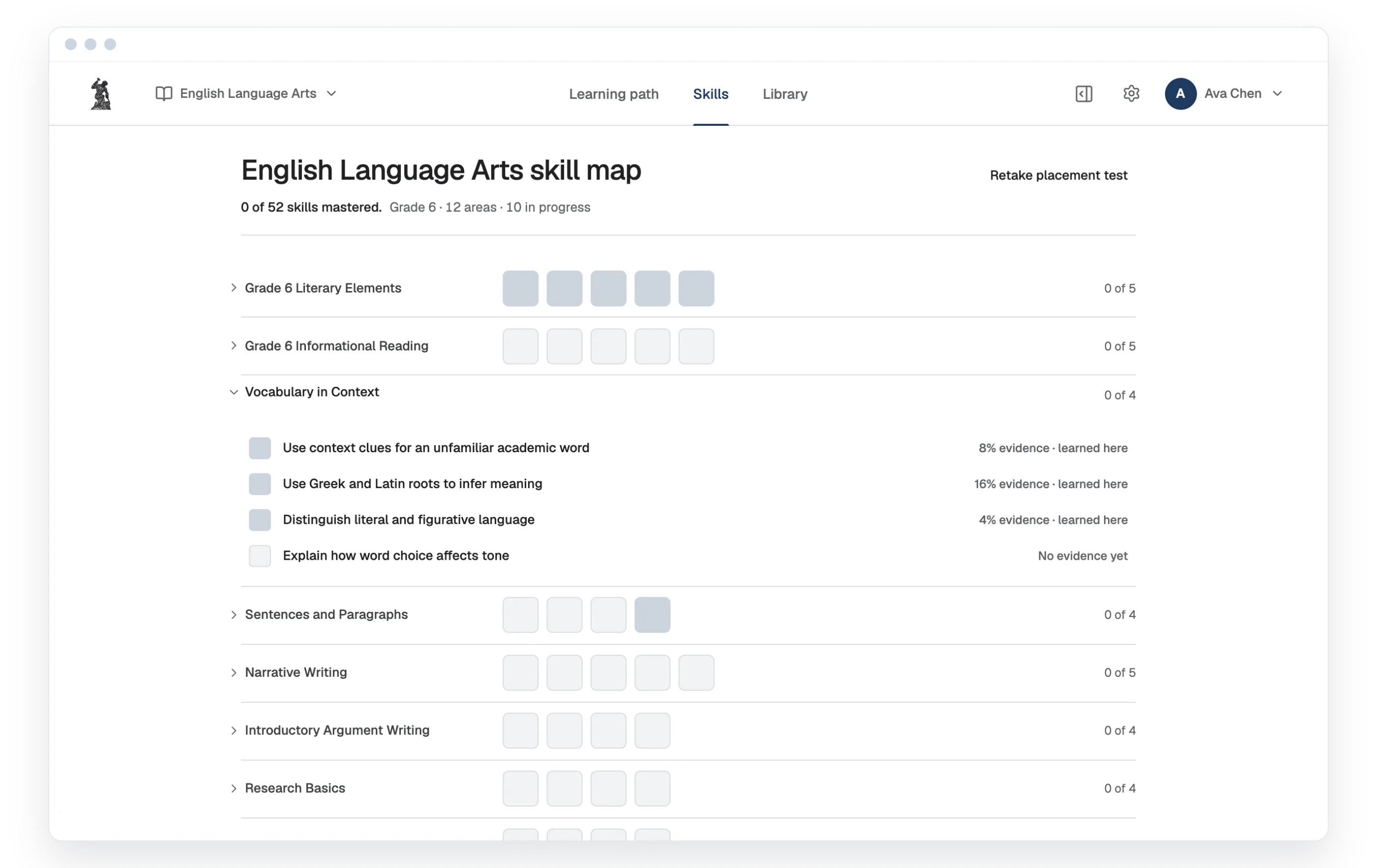
The skill map shows each subject's skills and how much evidence your child has for each, so you can see the starting point rather than take it on trust.
Your first two weeks
Going from decision to first lesson can take only a few days. A typical start looks like this:
- Setup: a profile with your child's age, interests, and how they learn; a mentor they choose; and their subjects. Setup and placement can both happen before your child's last day at school.
- Placement: one test per subject, untimed, which your child can spread across a day or two.
- The week's shape: in the weekly plan, choose the school days, start time, and daily minutes, and it builds the blocks your child sees as their Today card.
- First lessons: each opens with what your child already knows, where it is going, and the project it leads to. Our Always-On Mentor stays beside it: your child can highlight any line to ask about it, hear a word read aloud, or have the idea drawn on the mentor's board, and the mentor offers help when it looks like your child is having a hard time, re-explains after a wrong answer, coaches projects without doing them, and clarifies reading-check questions without giving away the answer.
- First grades: We grade everything your child submits as soon as they submit it, so grading never lands on you. When your child gets something wrong, we help them work through it, and projects come back with feedback they can revise from.
The first 14 days are a trial, so those two weeks show you how the rest of the year will run before regular billing begins.
Counting the rest of the year
Your homeschool's record starts the day your child does. Each morning your child checks in once, their activity keeps the session open, and the minutes become the attendance record. The attendance PDF from our Parent Dashboard therefore covers exactly the days at home, and it sits beside the old school's attendance for the first part of the year.
High school credits work the same way. Our transcript runs on a July-to-June school year and counts credits from the hours of completed lessons in each subject, at 120 hours a credit.
A 10th grader who starts chemistry with us in February and completes 48 hours by June earns 0.4 of a credit that year; a subject with fewer than 15 hours shows no credit yet. Fall semester credits stay on the old school's transcript, and colleges read both.
Pace for the rest of the year
There is no class to catch up with. Your child moves on when they show their understanding in each reading check, so a strong subject can move quickly and a weak one gets the time it needs. Review checkpoints come at least every three lesson groups, so skills from the first weeks stay fresh.
By spring, your child's progress record shows each subject's grade level, mastery percentage, and lessons completed, so you can see how far each one has moved since the day you started.
Some children come home worn out and need a lighter start. Set fewer daily minutes for the first weeks and raise them later, or read our guide to deschooling before homeschooling if a real break makes more sense.
Summer and next fall
A mid-year start raises the question of June. School buildings close; your child's path does not. Some families keep lessons going lightly through the summer to use the momentum, and others stop when the local schools do. Either way, the weekly schedule sets the days, and the path picks up exactly where your child left it.
For a high schooler, the calendar matters a little: hours completed through June count toward the school year that is ending, and hours from July 1 count toward the next one.
Next fall your homeschool runs on a normal yearly cycle, including any yearly notice your state asks for by a summer date. Our curriculum planning guide covers that calendar.
Frequently asked questions
- Can we start before the old school sends records?
- Yes. Placement does not need the school's records, so lessons can begin while you wait. The records matter later, for a transfer or a state review.
- Should I wait for the semester break?
- Only if a few weeks matter to your child, such as finishing a class with friends. Legally and academically, starting mid-semester costs nothing.
- What if my child was failing a subject?
- Placement sets the starting grade from what your child can do and puts earlier gaps first, so the failing grade does not decide the level.
Starting during the school year
Placement picks up each subject where your child is today, and the first lessons are ready within days.
$149/month per child after the trial.
Sources (6)
- New York 8 NYCRR 100.10: home instruction
- Ohio Department of Education and Workforce: Home Education Fact Sheet
- Florida Statutes section 1002.41: home education programs
- Georgia Department of Education: Home Study Declaration of Intent
- Virginia Department of Education: Home Instruction Handbook
- Washington OSPI: laws regulating home-based instruction