What a high school biology course covers
A full high school biology course covers the chemistry of life, cell structure and function, energy in cells (photosynthesis and respiration), cell division, genetics and heredity, DNA and protein synthesis, evolution and natural selection, ecology, and the diversity of living things. Many courses add human body systems. The thread through all of it is the same: structure explains function, and evidence from observation supports the explanation.
What a student should be able to show
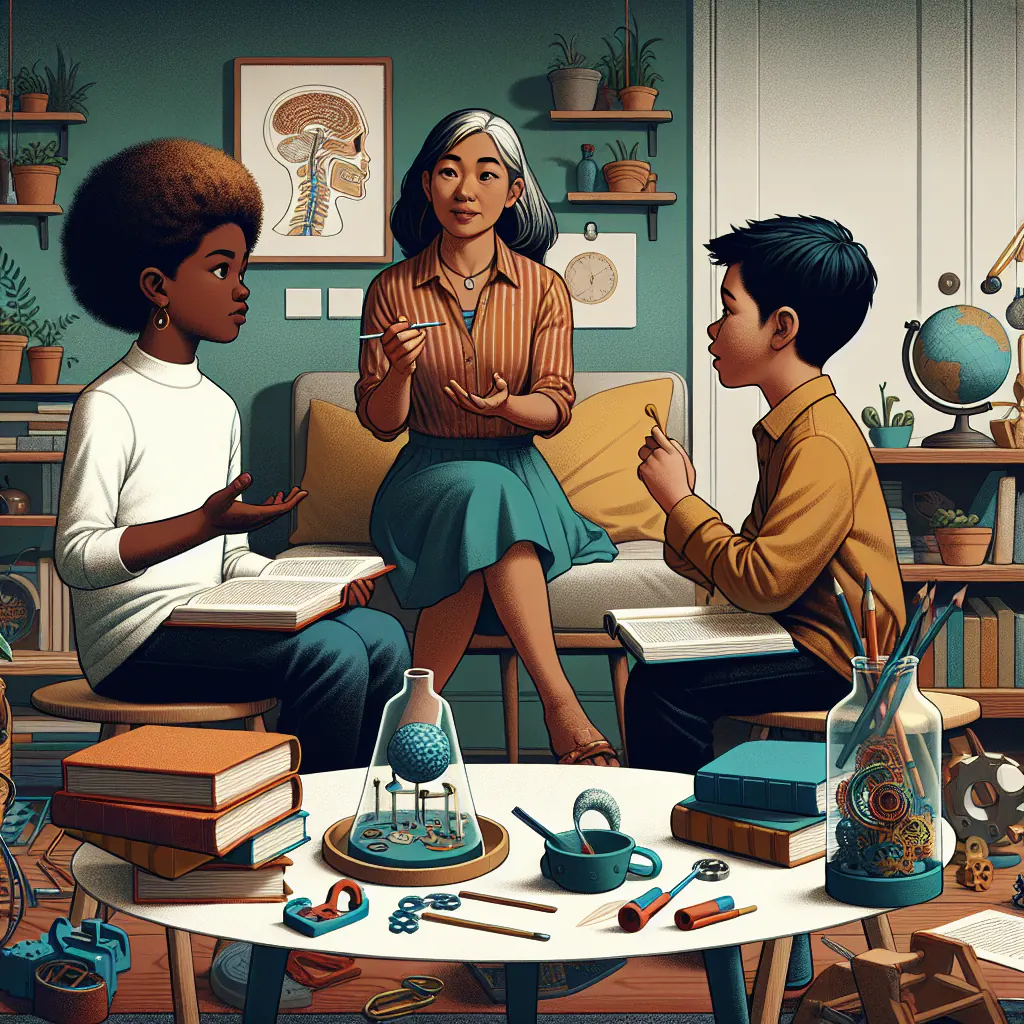
Biology is a lab science, so a transcript entry should rest on investigation as well as tests. A student should be able to show:
- Observation records: labeled drawings and notes from direct observation, such as pond water, plant tissue, or cells under a microscope.
- An experiment the student designed, with a testable question, a control, data, and a conclusion.
- A written explanation of a process, such as how a trait passes from parent to offspring, in the student’s own words.
How labs count for college
A course counts as a lab science when it includes hands-on investigation with written reports. Requirements vary by college, so check the admission pages of the schools your teen is considering. The lab notebook or reports are the record, and we save every report your teen submits.
Labs and dissection at home
Biology has more home-friendly labs than most sciences, from microscope work to a field survey of a backyard or park. Dissection is a choice, not a requirement. A student who is uneasy with it can learn the same anatomy from detailed images and models and still be assessed on what they know.
What the AP Biology path is
AP Biology follows the College Board course framework. It covers the topics above at college depth, with heavy emphasis on data analysis, experimental design, and connecting concepts across units, and it expects hands-on investigation. Students take the AP exam in the spring. See the College Board course description for the current units and exam format.
How our course works
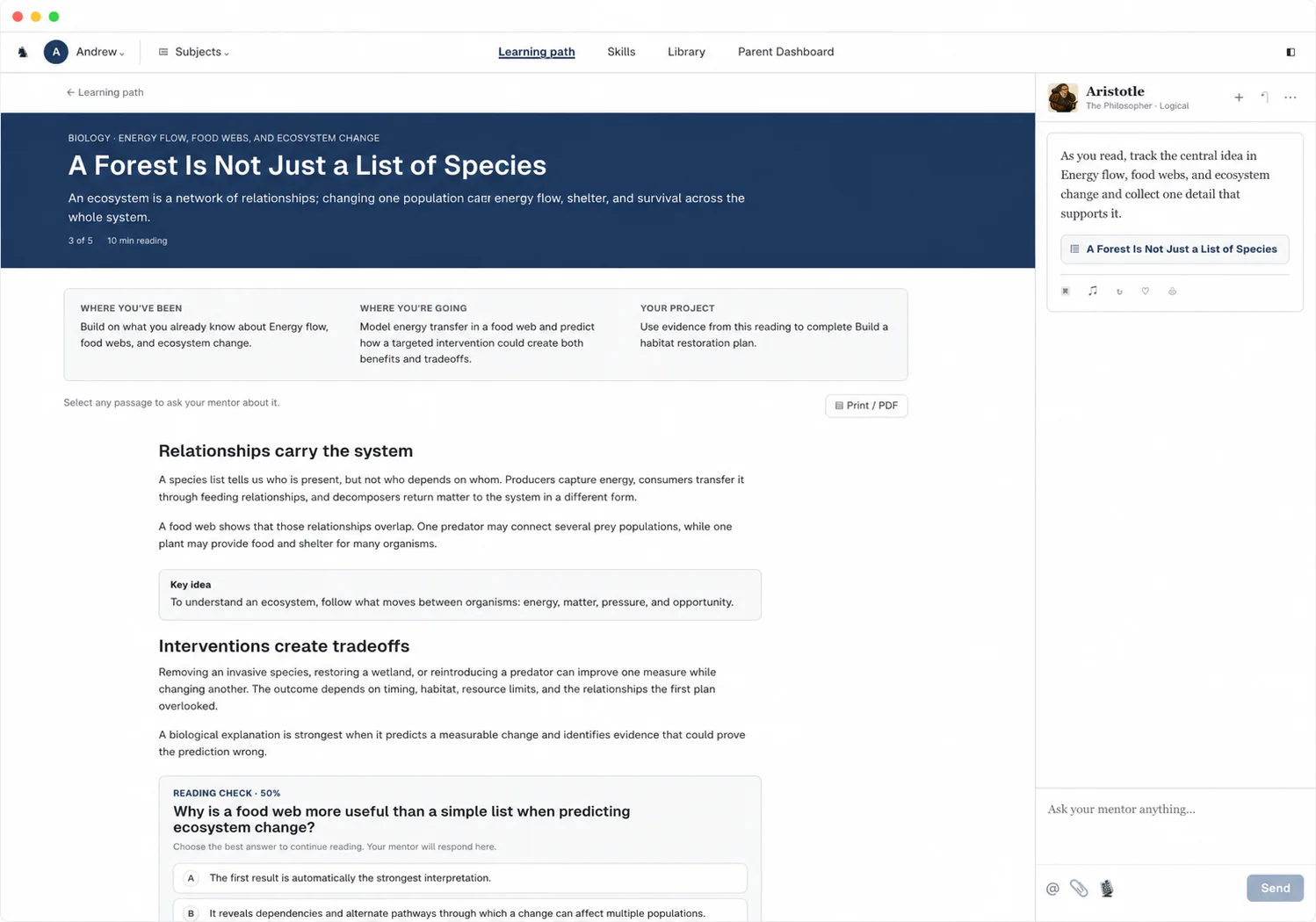
Placement, a short adaptive test, suggests a starting level, and lessons can use a student's interests as context: a learner drawn to marine life might study cells and ecology through reefs and migration, while one interested in health might work through human body systems and disease. These are illustrative possibilities, not reports of actual student work. The Always-On Mentor, software that stays open beside every reading, answers questions about any passage your teen highlights and can sketch a process like cell division step by step on its board.
Reading checks are graded instantly. Observation records, investigations, and written explanations are graded on submission with written feedback on the reasoning, so grading is off your plate. Our advanced biology course supports AP-aligned study. Check the course page for its title and Course Audit status. Check each college's lab-science requirements.