What a teen computer science course should cover
A computer science course should give your teen practice writing, testing, and explaining their own programs. The core sequence is variables, conditionals, loops, functions, data structures, testing, and program design, with each idea built on the one before it. A student who finishes should be able to take a problem, break it into parts, write code that solves it, and fix the code when it fails.
What a student should be able to show
The evidence of learning is working code. By the end of a first course, a teen should have a few programs they designed, tested, and revised, and should be able to explain why each one works. Look for these:
- A small program built from scratch, with the student able to walk through every line.
- A debugging record: an error, how the student found the cause, and the fix.
- A larger project the student chose, with a description of what it does and what they would change next.
A parent should see the code and the explanation, not just a completion percentage. A debugging note can make that understanding visible: what went wrong, how the student found it, and why the change fixed it.
One program can exercise several skills
A simple score tracker can begin by accepting two team scores and reporting the result. Later, the learner can store several games, calculate an average, and reject an impossible input. Each change introduces a reason for a new concept: a condition, a loop, a function, or a data structure. Testing a tie or an empty result list helps reveal whether the program handles more than the example it was written around.
Debugging is the lesson
Getting stuck is part of programming. Good help points the student at the error message, asks what they expected the code to do, and lets them find the mistake. A worked answer can help explain an idea, but the student also needs a chance to find and fix a problem themselves. A video can demonstrate the process; feedback on the student's own code helps them apply it.
What counts for high school credit and college
A computer science credit is strongest when it rests on projects and an honest record of the work. Colleges look at the transcript course title, the level, and the work behind it. Students who want an outside benchmark can take the AP Computer Science A course, which follows the College Board course framework and centers on programming in Java and on algorithms and data structures. AP Computer Science Principles is a broader course for students who want a survey of computing, data, and its effects on society. Check the College Board course descriptions for the current topics and exam format.
How our computer science course works
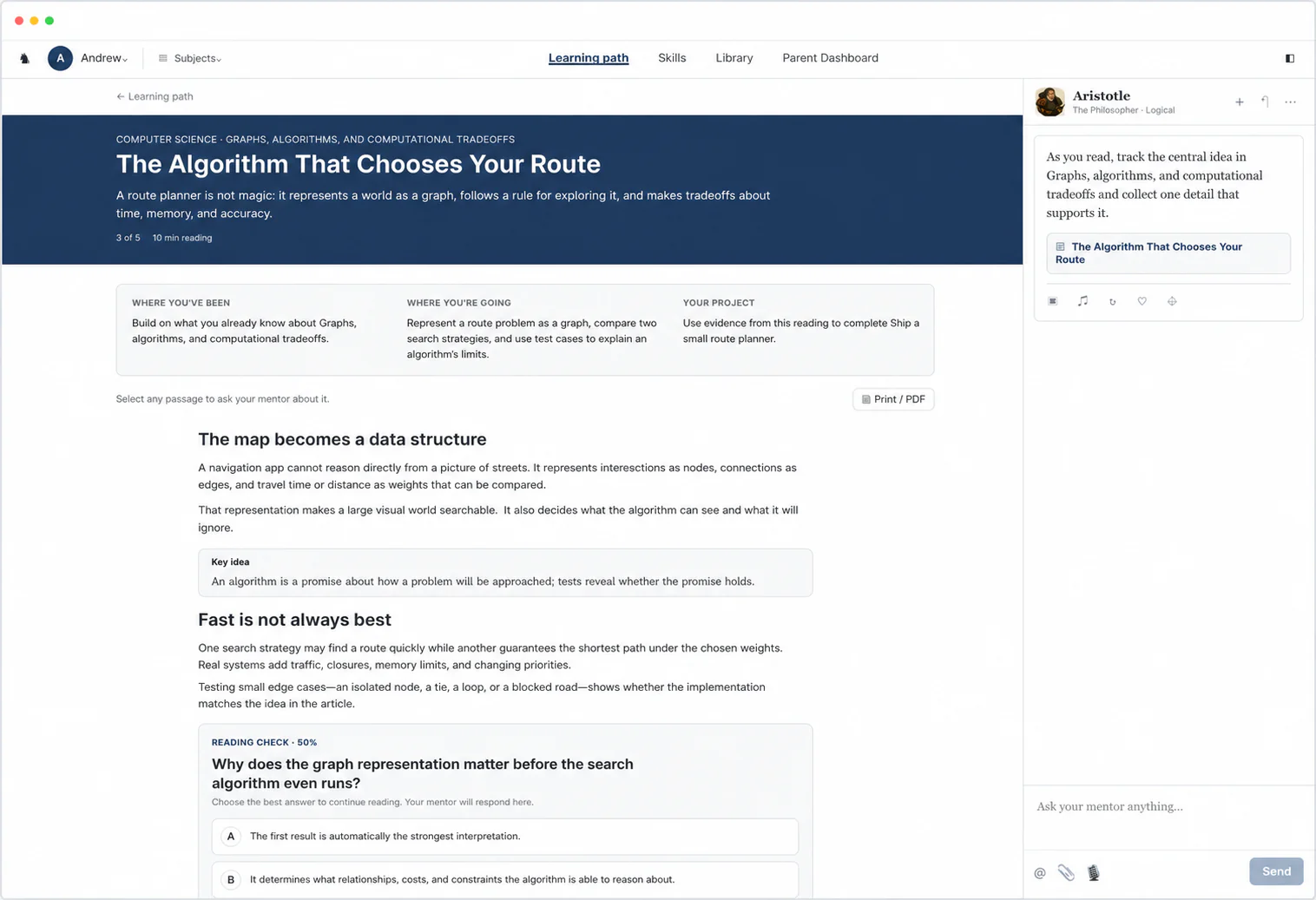
Placement, a short adaptive test, sets the student’s starting point, so a beginner starts with logic and a student who already codes starts further along. Lessons and projects can connect to the teen’s interests: a games fan might build game logic, a music fan might make a tool that works with sound, and a student who likes data might create a charting program. These are possible projects, not reports of actual student results. The Always-On Mentor, software that stays open beside every article and project, answers questions about any passage the student highlights, and guides each project step without writing the code for them.
We grade everything your child submits as soon as they submit it, so grading never lands on you. When your child gets something wrong, we help them work through it, and projects come back with feedback they can revise from. Computer science sits in the 3-12 core and electives catalog, with AP-aligned advanced courses for students who want that path.
Where to start
If your teen has never coded, placement can suggest a first lesson. If they have coded before, placement starts them further along, and their first submitted programs show what they already understand and what still needs practice. Those artifacts are more informative than a completion percentage.